life stories

Welcome to Coconut Connections

Real life stories

Saturday, May 9, 2015

The forgotten mothers of the "War in the East".


Today it's Mothers Day, and this is for you Mom and for all the mothers who suffered so tremendously under the occupancy of the Japanese  during World War Two.You were the forgotten once. As of late I am thinking a lot about you. You were my hero. The unbelievable pain you and all the other mothers suffered during those years is not to describe.
 Not many stories have been told about the suffering of this group. Indeed, when we reflect on that part of World War Two we think, automatically, of these brave military men, of whom there were 132,000. Yet there were 130,000 Allied civilians- predominantly women and children- who also endured appalling privation and cruelty, but whose story is barely known.
Once Japan had conquered South-East Asia, the Europeans, Americans and Australians who had been living there as planters, teachers, missionaries and civil servants were rounded up and trucked away to the 300 "civilian assembly areas"- in reality concentration camps- that the Japanese had created.

Line up, and hand in all your money and valuables.

New internees arrive in camp.
Camp Moentilan were we were taken in OCTOBER 1942.

Our second camp, Banjoebiroe 10.

Our beautiful view.
By far the largest group were the 108,000 Dutch civilians, 62,0000 of them women and children, who were sent to camps on Java, Sumatra, Borneo and Timor. Their ordeal was to last three and a half years and would claim the lives of 13,000, due to starvation, exhaustion and disease. Many people all over the world had never heard about this.
All women and children between the ages of 11 and 60 had to do so called "useful work". In addition to this distressing, undignified and exhausting work, the women were subjected to constant brutality. To look a soldier in the eye, or fail to bow to him instantly would incur a vicious beating that could break a nose, or loosen teeth. At Tenko, or roll call, which took place twice a day, our mothers had to stand for hours in the blazing sun, no hats were allowed and even the elderly and children were not allowed to sit down.Another punishment would be the shaving of your head. This would be done in such a vicious way that the women would simply wrap a scarf round her bloodied scalp and would carry on.
Bowing lessons, all day long.

A severe beating because she did not bow correctly.
Worse even was the fear of starvation. Our mothers would be desperate to keep us alive. They would catch frogs, lizards and snails and boil them in a tin cup on the back of their irons.
Or they would sneak to the fence (gedek) to trade their meager possessions with local people for a banana or an egg. But if the Jap would catch you, you would receive a severe beating or even executed.

By the time liberation came on August 15,1945, the degradation of our mothers was complete. Like the POWs in their loin cloths, our mothers had virtually no clothes, many wearing old tea towels for bras, and sandals fashioned out of strips of rubber tyres. My mother had traded all her bra's for food. I even traded one bra for my mother, while she was near death, at the "gedek". Sadly when I took it to my mother I had received a stone in a " pisang blad"  (banana leaf). Our mothers were like skeletons, so thin, half-blind with malnutrion and huge numbers of children and mothers had died.
Our mothers were heroes and we should never forget what they endured in these camps, thousands of our mothers and their children lived with hunger, disease, cruelty and death, and we should remember their ordeal and their courage. Not only on Mothers day, but every day.

HAPPY MOTHERS DAY MOM, wherever you are. I am always thinking about you.

WHY??????

Many years have since past,
But memories forever last.
Women, children in prison camps
Where nobody was able to give them a hand
Put there by the Japanese Regime
With soldiers who were so terrible mean.
Although it is so long ago
My mind goes back to 1944
How we women shed our tears
In that hell three and a half years.
These Japanese were brutal and vicious
Cruel and heartless and twisted.
Endless roll calls, just for fun
Everyday in the burning hot sun.
They screamed "Kiotskay!", "Kiray!", "Nowray!" and waved their whips
And we women knew better than to give them lip.
We kept our wits together
Because our children was all that matter.
When I am thinking about those years,
They come back with so much fear!Swamped by misery, grief and pain
We hoped God would hear his name.
We sang of his glory and begged to be heard,
We prayed, we pleaded, but never a word.
We reached for the last straw in despair
And hoped somebody outthere would care.
Why, oh why was it, that no help came
Did you not hear us calling your name?
Why was it, you let innocent children die??
I will never forget that you passed by.
There was thunder and lighting all around,
I was sure you would strike these Japs to the ground.
We were in so much agony, grief and pain,
We hoped for mercy, but it never came.
There in that horrible prison camp
"YOU" never offered a helping hand
Most women lost their fate,
For thousands freedom came too late!
And when my times comes to face "YOU"
I only have one question...WHY??
Would you let innocent children die??

I wrote this poem in 2012,. I remembered my mothers stories about the time we were in Moentilan in that horrible camp. Where every day children were hungry and died of starvation, while the Japs had plenty to eat.She told me that terrible things had happened in the church, many women were tortured and beaten right under the watchful eyes of God. She told me about the thunder and lighting, and why God would not strike these Japs to the ground.That's when she told me that she was not able to believe anymore.I wrote this in my book as well. "I THOUGHT YOU SHOULD KNOW", which I wrote in 2010. How these mothers have suffered , and how they were the Forgotten women of the "War in the East".

But today its Mothers Day, and we remember our mothers our heroes.
Mom you left us 12 years ago, but you are always on my mind. I love you.

Monday, April 20, 2015

Petition 245: Our monthly demonstration in The Hague


                                     FOUNDATION OF JAPANESE HONORARY DEBTS
                                                                     NGO, STATUS ROSTER


His Excellency Shinzo ABE
Prime Minister of Japan


The Hague, 14 April 2015
PETITION: 245
Subject: Foundation of Japanese Honorary Debts 25th anniversary.


Excellency,

The Foundation of Japanese Honorary Debts was founded on 4 April 1990 for the purpose of looking after the interest of the Dutch East Indies. During the past 25 years the foundation tried to reach an agreement in good faith and trust with you and your predecessors. On the basis of acknowledgement and mutual respect we will continue to convince you that Japan has a lasting moral obligation towards the Dutch victims of the Japanese terror during World War 2.

Prime Minister,
\
The 1951 San Francisco Peace Treaty and the Yoshida-Stikker protocol of 1956 gave Japan the opportunity to restore its economy. As a result Japan could give war reparation loans to support many of the nations it occupied during World War 2; but left out the Dutch from Dutch-East Indies on the grounds that the 1956 Yoshida-Stikker protocol had resolved Japan's moral obligation voluntarily.

Prime Minister,

The Foundation of Japanese Honorary Debts disagree with this view point as the "compensation" was only for the Dutch citizens who were locked up in concentration camps, forgetting the Dutch terrorized outside the camps.But also because the very small voluntary payment in no way covers the permanent mental and physical damage sufferings inflicted on the victims by the Japanese Imperial Army. In addition the judgements by the Japanese lower courts, that Japan violated Laws and Customs of War on Land (the Hague Convention of 1907) and the Geneva Convention on Prisoners of War of 1929, made clear that Japan is obligated to the Dutch victims. The Supreme Court of Japan did not come to a conclusion as it dismissed the cassation on administrative grounds. The verdicts by Japan's lower courts were not dismissed, shaming Japan forever.

Prime Minister,

In our dialogue with Japan's representatives in The Hague we will continue to seek a mutually acceptable resolution for the Dutch victims of the Japanese terror during World War Two. The 70th Anniversary of the ending of World War Two is the opportune moment to make such a resolve and would give the 25th Anniversary of the Foundation of Japanese Honorary Debts a "silver lining".

On behalf of the Foundation of Japanese Honorary Debts,

J.F.Wagtendonk
President

==========================================================

CLOUDS  are covering the flag of the Rising Sun of Japan. I wonder how long these clouds will cover this red spot in Japan's flag. The white flag with the red dot in the middle, which they (Japan) calls "The Rising Sun".

This is the name my mother and the thousands of women who were prisoners of the Japanese Imperial Army during World War Two gave ' the flag with the red blood spot in the middle'."That is the flag of Japan'' : my mother would say. How she and all the women hated that flag. Japan has forgotten how cruel their Japanese army was. How they raped innocent girls and young mothers, who were locked up by these barbaric men. These women were totally helpless and were abused every day by these monsters. How can one ever forget what these monsters did to my mother and her sister.How can one ever forget seeing your mother being beaten over and over again in front of your eyes. As little as we were, we knew how our mothers suffered, we could feel it. I will never be able to say that I forgive these monsters what they had done to my mother.I will forever ask the question "WHY?"

Bnajoebiroe 10, the last camp where we were held by the Japs.

Interior of our living room, dining room, bed room and play room.   

Sharing whatever space we had was sometimes not easy.
History continued to be a large part of my life. Whenever WW2 is mentioned or there are memorial services held I have to think about my mother, her sister and their husbands. I think about the Asian Holocaust, then I discover that there are large parts missing from the stories of WW2  It touches deep emotions inside of me, almost to the point that I become angry. How is it possible that Japan has never dealt with this legacy? Why is it that Japan of today keeps denying the unbelievable violence inflicted by their Imperial Japanese military during WW2. Many people were brutally murdered. This was the holocaust of Asia. Many millions of people suffered at the hands of this barbaric Imperial Japanese army. Many perished. Most of the casualties Civilians, innocent women, children and men.Many women and young girls brutally raped and tortured and then killed. Young girls forced into sexual slavery, recruited at Imperial Japan's behest  with the knowledge of the Japanese government authorities.


The following poem has been written by a Service Man while a prisoner of the Japanese during World War Two.
The Writer is unknow,

                     CLOUDS,

There are clouds across the sun
In this South Pacific isle
Yes, dark clouds across the sun
And white men no longer smile
We had comrades who were foolish
That to give " Escape " a try.
For they know our captors story
For "Escape" someone will die.

There are windows by the fireside
Who know not of their loss
There are orphans in the classroom
Who must soon take up the cross
That was thrown in useless gesture
By these hopeful waiting lads
But the loss would have been greater
Had they taken nine more lads.

To men of "Faith" the sun still shines
And soon there will be a day
When the sky will show the sunshine
And dark clouds "Go Away".

Note: The Japanese policy was, if one man escaped, 9 others would die.

Try Escape, this would be your faith.

The Japanese would leave them there for days, for all to see.

Sadly for those who lived, carry the scars forever. Those who survived starvation, diseases, torture and pain are more hopeless enslaved than those who falsely believe they are free.God bless all of you who survived the horrific hell of the POW camps.

                                                          Survivors from HELL. 


Before and after.
I wonder how they got on with life.
We smile, we survived hell on earth.
Just a reminder to Japan, how it really was. You can't white wash your past. Its time to take the blame and remove the shame.

                                                           We who will remain,

We are indeed the lucky and unlucky ones,
As we are the ones who have lived to tell the tales of those we once knew.

We are the ones who carry those scars of things seen,done and lost
We are the ones who must never let those who are not here be forgotten by the new,

We are the ones who will never need to be reminded that "We will Remember Them"
As we are the ones who will always remember those we forever call friend. 

Written by Anthony Devanny a serving soldier.

Another Tuesday in front of the Japanese embassy in The Hague.
Three camp survivors from Banjoebiroe 10.
On the left it is me Thea, in the middle Mrs. van Kampen who now is 88 years young and on the right my cousin Toby van Driel.

Thursday, March 19, 2015

Petition;# 244, Our monthly demonstration in The Hague.


                                         FOUNDATION OF JAPANESE HONORARY DEBTS 
                                                                                     NGO, STATUS ROSTER

His Excellency Shinzo ABE
Prime Minister of Japan


The Hague,10 March 2015
Petition; 244

Subject; Marking the 70th anniversary of the end of World War Two

Excellency;

The appointment of a special panel to advise you how to mark the 70th anniversary of World War Two demonstrates the importance you seem to attach to the remembrance.Many individuals, organizations and nations urge you to take this opportunity to acknowledge the historic facts and accept the consequences.Simply an apology statement is unacceptable. To gain worldwide respect and integrity Japan must pass an act declaring the historic facts and accept the consequences, displaying remorse and expressing guilt for its war time actions. Anything less is a missed opportunity and will continue to influence Japan's economic political position globally.

Prime Minister,

The last 70 years Japan spent much time to improve its image of a peace and law abiding nation. However in not recognizing the emotional and material consequences of the lost war Japan failed to reconcile and to see the impact of historical memories for future international relations. Under the terms of the 1951 San Francisco Peace Treaty Japan obtained sufficient opportunities to correct what the war did to the people of the occupied territories. In accordance with the Peace Treaty Japan had no legal obligations, but in knowing the historic facts it should have concluded that there were overwhelming moral reasons to pay respect to the victims and compensate them. It is still not too late to recognize the moral responsibility Japan has. The remembrance of the ending of World War Two is a good moment to reconsider.

Prime Minister,

Crown Prince Naruhito stated the need to remember World War Two "Correctly". King Willem Alexander reminded "We will not forget - cannot forget - the experiences in the Second World War". Prime Minister Koizumi said "I believe that our country painfully aware of its responsibilities with feelings of  apology and remorse should face up squarely to its past history and accurately convey it to future generations". Many others have made the point that "whitewashing history will misfire". They are clear messages which must be adhered to in the forthcoming remembrance of the end of World War Two. The panel of experts advising you should take these remarks in consideration. We look forward to Japan's Declaration of Historic Facts, acknowledge these and accept the moral responsibility.

On behalf of the Foundation of Japanese Honorary Debts,

J.F.Wagtendonk,

President.

===============================================

Japan's memory of the past seems very short. The worst part of memory is that Japan tend to forget, and lose sight of the importance that war comes with a terrible price. Freedom came with many graves,war graves to remind us.For those who survived the horrors of that horrible War, the terrible treatment they received from their captors will never go away.  Japan seems to have forgotten that they were the ones who started this horrible war. This Japan of today seems to forget that starting a war comes with horrendous responsibilities, which never will go away. Japan seems to be a nation that doesn't like to acknowledge the consequences of that war, which they started in the first place.
Its important to remember what the Netherlands Indonesian people had to go through during World War Two in the Dutch East Indies.Its important to remember that after six years of hostilities Japan's capitulation in the Pacific came finally to an end at a cost of millions of death.Its important to remember those, who gave their lives, so we could live in freedom. Its important that this will never be forgotten.Its this year 70 years ago that this horrible war came to an end, at a terrible price.Japan has failed to atone for abuses carried out during World War Two as of today. At the Yasukuni Shrine are 14 top war criminals honored. This is the cause of tension not only in Northeast Asia but with other countries as well.
Japan has still a lot to learn.ORAL HISTORIES ARE A DYING ART, WHICH IS SAD INDEED, FOR THEY SHOW APPROPRIATE RESPECT FOR THE LIVES AND EXPERIENCES OF THOSE WHO HAVE COME BEFORE US, AND HAVE EXPERIENCED THE HORRORS OF WORLD WAR TWO.
And it is just as important for those who listen, to document those remembrances for those who's lives are over. That personal knowledge would otherwise been lost forever.We live in a time now where everyone seems to be just looking ahead as though we deem nothing in the past worthy of our attention. The future is always fresh and exciting, and it has a pull on us. But it is important to "discover" by simply looking behind us. There is so much to learn from the past.
This August it will be 70 years ago that Japan capitulated. Japan has never taken any responsibility for the atrocities their former military army inflicted on innocent people.Japan took away our freedom they tortured, starved, worked and raped us to death. The Nazis took the Jews to gas chambers while the Japanese used the prisoners, until they dropped dead from exhaustion.There were plenty to replace them. Japan of today perfumed World War Two with their sweetly-scented lies. Its time to stop lying and face the truth. Deal with history, start paying respect to the feelings of the people who are still alive today.Stop ignoring us. Its a discrimination against the victims.


The voices of the dead.
A poem by Harry Riley

                                               REMEMBER ME!

                                               Remember me!

                                       Duty called and I went to war
                                       Though I'd never fired a gun before
                                       I paid the price for a new day
                                      As all my dreams were blown away.

                                               Remember me!

                                      We all stood true as whistles blew
                                     And faced the shell and stench of Hell
                                     Now battle's done, there is no sound
                                    Our bones decay beneath the ground
                                    We cannot see, or smell, or hear
                                    There is no death, or hope or fear.

                                            Remember me!

                                    Once we, like you, would laugh and talk
                                   And run and walk and do the things that you all do
                                   But now we lie in rows so neat
                                   Beneath the soil, beneath your feet.

                                          Remember me!

                                    In mud and gore and blood of war
                                   We fought and fell and move no more
                                   Remember me, I'm not dead
                                   I'm just a voice within your head.


At last, after 70 years we know where you are.

Last year when my husband and I were visiting my aunt Anneke in The Netherlands,my mothers youngest sister, the only one who is still alive today showed us some old photographs. On one of the photographs was a young boy sitting beside this young girl. When I asked my aunt Anneke who these people were she told me that the girl was my Oma (grandmother) and the young boy was my Oma's brother.She told me that my mother was named after him. His name was Sietze Stenekes and they changed the name into Sietske.I asked what happened to my Oma's brother and she told me that one day he signed up to sail on a ship.Then the war broke out in Europe and they never heard from him again.
The only picture we have from my great uncle, the brother of my grandmother, as a young boy. On the left my grandmother.

Will continue....

Of course curiosity got the better of me, and I started to dig into the internet. I thought if he had been in San Francisco on a merchant ship it could well be that just like my step-father he was on one of the ships which were taking supplies to the front lines during World War Two in the Pacific.
And there it was, Sietze Stenekes passed away on the beach in Brasil. Than to my surprise I read that a book had been written about the history of the ship the " ZAANDAM " ( 1939-1942 )
The books title is "Destination New York"

Zaandam put in service (January 1939)

This book tells the extraordinary story of the captain, crew members and passengers of the Dutch passenger ship ZAANDAM of the Holland-America Line (HAL) in the beginning of World War II. The Zaandam was a new vessel. with the capacity of 125 passengers and 10,000 tons of cargo. She was put into service in 1939 between Rotterdam and New York on the day that British prime-minister Chamberlain visited the Italian dictator Mussolini to discuss the political tensions in Europe.In the period that followed the vessels of the HAL had begun to experience the first signs of the coming struggle. During the summer an increasing number of German Jews and other opponents of the Nazi Regime were trying to leave Europe.It became worse on September 1st when war broke out between Germany, Poland, Great Britain and France.During this period, when The Netherlands staid neutral, her ships, together with those of the United States, bore the brunt of repatriating tens of thousands of Americans, mostly summer tourists who had been stranded in Europe. The British, French and Germans had taken their passenger ships out of service. The London, Paris and Rotterdam offices of the HAL were besieged by anxious travelers.

Dutch ships and the breath of war

In the fall of 1939 the vessels brought in more passengers, far above their regular capacities.Hundreds slept on mattresses in cabins and public rooms. This process brought to The Netherlands the first hot breath of war and the newspaper publicity on the arrivals of the ships in the United States was tremendous. Movie stars, diplomats, prominent businessmen and even royalty, were forced to travel under makeshift conditions due to the overcrowding.
Several ships were stopped at sea by the fighting countries, some by German U-boats and other by British warships.The rush of repatriates began to decrease within a few weeks when the dangers of travel became greater.
The sinking of several Dutch ships and the many casualties in that period were the reason that the management of the HAL decided to withdraw the larger ships from service. The Nieuw Amsterdam (36,0000 gross tons) was laid up at her Hoboken pier at New York and the Statendam (28,000 gross tons) at Rotterdam.The service was maintained by the smaller passenger ships. During the winter of 1939-1940, three ships of the company, the Binnendijk, Spaarndam and the Burgerdijk, were sunk by mines.Several crew members and passengers died.

On route to the Dutch East Indies (Indonesia)

During the German invasion of The Netherlands on May 10th, 1940, the Zaandam was somewhere in the Atlantic Ocean on its way from New York to Cape Town with passengers and cargo. The final destination was Batavia (Djakarta) in the Dutch East Indies (Indonesia). Captain Stamperius had received orders to bring his vessel in the New York-Java Line service. Far from home, but quite safe, ship and crew sailed the year that followed in the Pacific Ocean.

Equipped with arms

The situation in the Pacific changed on December 7th, 1941, when Japanese attacked Pearl Harbor. This attack was also the start of their military operations in Southeast Asia. It was the second majar catastrophe for The Netherlands, because the Japanese were on their way to conquer the Dutch East Indies.
The day after Pearl Harbor was attacked; the Zaandam was almost ready to depart from San Francisco for Singapore with a hundred passengers and a full cargo. Sailing orders were cancelled and on the 14th the Dutch Government requisitioned the ship's services and transferred her to the Commandant of Sea Forces at Batavia. She finally sailed on December 26th, with her cargo, but during the delay, a four inch gun and two anti-aircraft guns were installed on board, as well as protection for the bridge and the radio room. Third officer Willem Broekhof was trained in San Francisco and became the gunnery-officer.
( Sietze Stenekes, my great- uncle had received training in San Francisco to handle the guns on board, that's how he ended up on the Zaandam, that's why his family never knew that he had changed ships)
The route was via New Zealand and the south coast of Australia to Oosthaven on Sumatra. Many warnings of Japanese submarines were received and on February 3rd the Zaandam arrived in Lampong Bay.
There was much confusion at Oosthaven and reports came in that the British had evacuated Malacca and withdrawn to Singapore. Thousands of evacuees, civilians as well as military, had reached Palembang (Sumatra) and had been transported to Java.
On February 8 the ship departed for Tjilatjap (south coast of Java), arriving there two days later to find the river crowded with large and small vessels, as well as United States warships. The next two weeks were spent in trying to get unloaded, but without success.

Attacked by Japanese fighters

On February 27, all the ships in the port were instructed to proceed to sea, but the Zaandam was ordered to return, as she had been designated to carry evacuees. She cruised off the coast all night. The next morning three Japanese planes appeared, but when they saw the ships guns open fire, they held off. In the meantime, the vessel began to turn in circles at high speed. After three attacks the Japanese gave up.

Escaping from Java to Australia with 892 evacuees.

Back in Tjilatjap the next day, March 1, people started streaming on board. There were British and Australian troops, Dutch air force personnel and their families, the staff of the U.S. Consulate and some civilians of various nationalities, including women and children. There was no check of the embarkations. To complicate matter, the British destroyer HMS Stronghold came alongside with a hundred persons, some injured, she had rescued from the British vessel City Of Manchester. It was finally determined that 892 persons came on board the Zaandam. There was a full clear moon. The little motorboat, which was supposed to come out to take off pilot  Droste, didn't show up. Captain Stamperius had no alternative then to take him and the assistant harbormaster Van Raalte along. As their families were ashore, their agony of mind can easily be imagined. In the evening the Zaandam was escorted by the Stronghold, but left her station during the night for unknown reasons. Later on that night the Stronghold was sunk by Japanese cruisers after a heavy and unequal fight.
The next day a lifeboat with 30 persons was picked up. They were survivors of the Dutch vessel Tomohon. The lifeboat itself had rescued three men from the Norwegian steamer Prominent. Both ships had also been sunk during the night by Japanese warships. Continuous calls were heard from ships being attacked by submarines, planes and surface ships. On March 6th, the Zaandam arrived safely at Fremantle in Australia where the refugees were disembarked.
It was April 27 before the Zaandam had been unloaded and loaded again with wool for Antofagasta, Cile, where she arrived on May 17. There she took abroad a cargo of copper for New Orleans. Despite many submarine warnings in the Gulf of Mexico the vessel arrived at the Louisiana port safely on June 4.


With the secret convoy AS-4 to the Middle East

In July, 1942, the Zaandam sailed in a small and fast convoy from Brooklyn with U.S. Army personnel, Sherman tanks and ammunition food for Cape Town. From Cape Town she was part of a British convoy proceeding to the Red Sea and Ismalia in the Suez Canal. Here the men and supplies were discharged to provide the British general Montgomery's forces for his attack on the German general Rommel at El Alamein a few weeks later.
The Zaandam returned to Cape Town, stayed there three days and sailed on October 21. She had 169 passengers, comprised for the most part of officers and crew members of torpedoed American merchant ships. The crew of the Zaandam numbered at that moment 130, so that the total aboard was 299.

Torpedoed on it's way to New York, 137 persons missing

On Novemeber 2, several hundred miles off Recife, Brazil, the ship was struck by two torpedoes of the U-174 and sank in thirteen minutes. It happened in the afternoon when second officer Willem Broekhof was on duty on the bridge.
The last seen of the Zaandam , were her screws sticking right out of the water. When she went under, bow first as though she was diving, she made a noise like a waterfall and there was a great big wave. There were a lot of bamboo rafts floating around, pieces of hatch covers that had been blown out by the explosion. People were hanging onto rafts which were built to give a man some support, but not to carry him to the hatch covers and to any piece of wreckage they could find.
Among the victim's in this vortex of destruction were captain Jacob Stamperius and captain Jan Pieter Wepster of the Volendam, who was a passenger. Stamperius was 58.Except for a short spell on leave, he had been her commander continuously since her maiden voyage from Rotterdam to New York, 1939. He decided to stay on the bridge.
About a month after the sinking, figures were released giving 162 of those abroad accounted for, with 137 dead and missing. For the latter little hope was held.

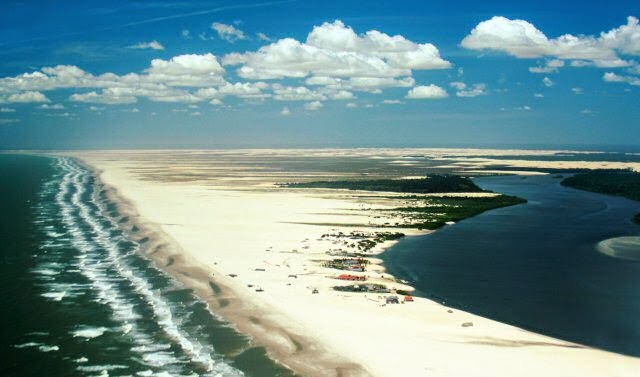
60 survivors reached the Brazilian coast.( one of them was Sietze Stenekes, my great- uncle)

The 162 men who survived landed at widely divergent points, in three lifeboats. Two boats, under the command of second officer Karsten Karssen, were picked up on November 7 by American tanker Gulf State and landed at Port of Spain, Trinidad, on November 13. One boat was carrying 72 men, the other carried 34.
The third boat, commanded by second officer Willem Broekhof, carrying 60 men, landed in a remote part of the Brazilian coast on November 10, after being in a leaking boat for eight days..(This was the leaking boat Sietze Stenekes was on) Broekhof kept a diary during these eight days. In the early morning of the 10th, land was sighted. He manoeuvred his boat carefully through the surf. The men got out of the boat and kissed the beach.


They found they were half a mile of Ponte dus Mongues and four and a half miles west of the Rio Perguicas. They found some fishermen who took them five miles up the river to Pharo. In the afternoon Willem Broekhof left on horseback for Barreirinhas, where he arrived at night and reported to the chief of police there. The British consul then took charge and the men were well cared for until they were well enough to travel back to the United States. Two men died during there stay in Brazil. One of them was my great- uncle Sietze Stenekes, who was badly wounded.
Sietze was buried in Barreirinhas. Later his remains were transferred to Puerto Rico National Cemetery where he is buried as an American soldier.Sietze was 56 years old.
Now we finally know, after 70 years. Your father and mother, your sister, your cousins, nephews and nieces always wondered what happened to you. So sad for your sister my Oma (grandmother) she has had her share. Two son in laws killed by the Japanese, one of them found a grave on the bottom of the sea and one of them (my father) worked to death on the Burma railroad as a slave laborer. May you all rest in peace.
Sietze, brother of my Grandmother.
Kanchanaburi , Thailand.
My grandmothers son in law Klaas van der Wal.My father.
 The  0-16 went down and found her last resting place
My grandmother's son in law Tobias van Driel.
Tobias was married to one of my grand mother's daughters, the wreck of the 0-16 was not found until 2005. The two daughters who made it safely home, after being captured by the Japanese and spend three and a half years in concentration camps on the island of Java.It has not been easy for my Oma (grandmother) Two of her girls so far away, both losing their husbands and to have never known what had happened to her brother.A war brings so many tears and pain. A war will end, the living will mourn, and can do nothing to cope...but cry....

83 days on a life raft

As harrowing as the eight days was on the life boat, it could not match that of a trio of other Zaandam survivors. Three months after the Zaandam went down, the total missing persons had been reduced by three, when a raft was picked up by a U.S. Navy patrol craft, PC 576. On the raft were Kees van der Slot, 37, of Rotterdam, an oiler, Nicko Hoogendam, a 17 year old Dutchman from Vlaardingen, and Basil Izzi, 20, from South Barre, Massachusetts, of the American gun crew on the Zaandam. The men had drifted for eighty-three days, from November 2, 1942, to January 24,1943. Originally there had been five men on the raft, which measured only eight by nine feet.George Beezley, an American sailor who had been a passenger on the Zaandam died after sixty-six days, Ensign James Maddox of the U.S. Navy, who had been in command of the gun crew on board of the Zaandam, passed away on the seventy-seventh day.They kept themselves alive with plenty rain water, food was the major problem. They finally managed to catch a bird on Thanksgivings Day, just after they had been passed by the first of three ships that didn't see them. After that they caught a shark, using their toes through a noose as a lure, but the meat would spoil in a few hours.
Finally they were rescued by the US Navy patrol boat, PC 576, which detached itself from convoy whose planes had spotted them, the men were living skeletons and had lost about eighty pounds each in the more than two thousand miles they had drifted.

                                                              WAR ( a poem by Win Rainer)

Can anyone forget the war
The principles worth fighting for,
Can we ever accept loss of life
The sadness and emptiness of a wife,
Times are changing that we know
Leave our young in peace to grow
How can they achieve and understand
Any nation over land,
Power is a mighty blade
That never achieved any grade
Young people have the right
To their life without a fight 
To make their way in peace
War is nobodies release.

Saturday, February 21, 2015

Beheading of Japanese hostages Petition;243


                                    FOUNDATION OF JAPANESE HONORARY DEBTS
                                                                                   NGO. STATUS Roster


His Excellency Shinzo Abe
Prime Minister of Japan

The Hague, 10 February 2015
Petition: 243
Subject: Beheading of Japanese hostages by ISIS


Excellency,


We are horrified by the beheading of the Japanese hostages by the Islamic State tyrants. We offer our condolences to the Japanese families and friends of the murdered hostages. They must be in a terrible state of fear, pain and anger. The video pictures showing the barbaric executions must hurt them deeply. The pictures prove ISIS merciless killing, underscoring their demands and use of terror. Families and friends of the victims will be traumatized by it forever. They will need support now and in the future in coping with the traumas. Their lives will never be the same again. The gruesome pictures of the beheading will never go away.


WE KNOW IT ALL TOO WELL, WE HAVE SEEN AND EXPERIENCED IT OURSELVES.

Prime Minister,

In our sympathy with the Japanese families we feel the pain and sorrow. Many of the surviving Dutch from the Dutch East Indies had comparable experiences. Japan has a history of similar terror whilst occupying and colonizing South East Asia. During that period public beheading was part of their barbaric rule. The Japanese military had no mercy during their regime of terror and abuse. Only after Japan's capitulation in 1945 did the survivors learn about the fate of their loved ones. They cannot forget the shock that their father, grandfather or son was beheaded by the Japanese military. Today's pictures remind them of that cruelty. I know from personal experience how it feels. After 70 years I still feel the pain and sorrow.

I hope that my father and grandfather will rest in peace, which was taken away so cruelly.

Prime Minister,

According to CNN and NHK you said: " We are deeply saddened by this despicable and horrendous act of terrorism and we denounce it in the strongest terms. To the terrorist, we will never, never forgive them for this act.''
For the Dutch whose relatives were killed in the same barbaric way it is still very hard to forgive the Japanese. So you see your recently expressed sentiments match ours. The fact that the Japanese government still denies any responsibility for these criminal acts during World War Two, leaving the victims families behind without condolences and sympathy, makes it even harder to forgive, let alone to forget.

More than ever the future of Japan lies in acknowledging its past and accepting full responsibility for that past.

Prime Minister,


In any event we hope that you will take responsibility in taking care of the families of the beheaded hostages. You cannot claim that the victims had no business to be there nor can you ignore Japan's responsibility to take care of the families of the beheaded . Demonstrate for once, in securing Japan's future, that you care and take responsibility now and for the past.


On behalf of the Foundation of Japanese Honorary Debts.


J.F. van Wagtendonk

President


================================================================

This petition was handed over on February 10, 2015, to the Japanese Embassy in The Hague at our monthly demonstration, which takes place every second Tuesday of the month.

When I was typing this petition 243 on my blog, tears were streaming down my face.Back were the days when I heard my mother's screams in the night, being raped over and over again by these monsters, during our captivity in Moentilan on the island of Java. Her dreadful nightmares, returning night after night, being beaten and beaten again, being so afraid that the children would starve, wondering again and again if they ever would make it out alive. Seeing her friends one by one die, seeing them being tortured in front of their eyes. Yes Prime Minister Abe your fathers and forefathers, were like ISIS. How can one be so two faced as this Prime Minister of Japan, who keeps denying all the atrocities inflicted by Japan's former military.How can this Prime Minister worship those war criminals laying in the Shrine who did exactly what ISIS is doing now. BEHEADING, RAPING, BURNING AND BURYING PEOPLE ALIVE.Playing soccer with the heads of the beheaded, Spearing the heads on bamboo sticks and than displaying them for all to see. Yes Shinzo Abe, your former military played games, who could behead the most men in 20 minutes with their swords.The swords your former military liked to use on every occasion.Your former military even beheaded women for trying to steal some veggies from your former military vegetables patch.The vegetable patches which the women had to take care off, day in and day out, in the burning tropical sun, until they passed out.My mother and her sister would never forget how hot the sun was beating on their heads and how these  monsters used the backs of their swords on them if they stopped for a minute to catch their breaths,.Vegetables, which looked so delicious and which they would have liked to feed to their children, who were starving to death.Yes Prime minister Shinzo Abe, it now hits close to home, and it hurts, it hurts unbelievable. I hope you can feel the anger and feel the pain, like our mothers, fathers,children, and grandfathers were feeling. The pain and the anger still felt by the victims who are still alive today.

How can this Prime Minister say what he said on CNN and NHK, when this Japan has not cleaned their own barbaric past.Indeed Sinzo Abe, we can never forgive and never forget what those Japanese monsters did during WW2. How sorry and saddened I feel for the families of these Japanese hostages and how I feel the anger towards ISIS. this is exactly how I feel towards you Prime minister Shinzo Abe,How can one forgive a nation like Japan that cannot come to terms with their past, and how can one forgive and forget a nation like Japan that changes their history books, which is full of lies anyway.


Tuesday, February 3, 2015

Our monthly demonstration., 2015


Den Haag, January 13,2015

PETITION #242; A NEW YEAR TO RECONCILE AND REDRESS.

His Excellency Shinzo ABE

Prime Minister of Japan


The Hague, 13 January 2015.

Petition: 242

Subject: A new year to reconcile and redress.

Excellency,

The Foundation of Japanese Honorary Debts and the supporters, wish you and the people of Japan a happy and prosperous New Year. A year in which your promised change towards a lasting peace based on Japan's economic revival may come through.With your renewed mandate you and your cabinet obtained the time and the support in shaping up a "new Japan"ready for its peaceful and democratic future. It also gives you the opportunity to make good the past in view of that future.

Prime Minister,

In the past year you invested heavily in international relationships with your neighbors and with The Netherlands during the Royal Dutch visit to Japan. During the many international visits you were reminded that Japan's military past is not forgotten. Regardless of your efforts and demonstrations of goodwill it became clear: a positive resolution of Japan's war history is essential in developing future relations.

Japan cannot but accept the facts and come forward with sustainable proposals acknowledging these facts. Japan must offer the surviving victims and their next of kin reconciliation and redress. The 15th Augustus 2015 commemorates the end of World War Two. After the war Japan was given the opportunity to resurrect and to reconcile, but failed to redress its wrongdoings during that war.

Prime Minister,

It is only eight months to the 70th Anniversary, a limited time in which to come to terms for a sustainable solution. You are now in a position to demonstrate that Japan wants to reconcile its past and invest in a peaceful future. Japan cannot continue to live with its unresolved past of coercing Comfort Women into military sexual slavery. Kempetai terrorism, unit 731 medical experiments, racial discrimination and large scale concentration camps with the purpose to annihilate its inmates. The victim countries and their NGO's will continue to remind Japan and the international community that reconciliation is long overdue and cannot wait any longer. On the 15th of August 2015 you can give Japan back its respect and establish a sustainable future.

Prime Minister,

The Foundation of Japanese Honorary Debts has written 241 petitions to the Prime Minister of Japan, which were handed over to the Japanese Ambassador in The Hague personally. We never received from the Prime Minister of Japan an acknowledgement of receipt of any of the petitions, nor an encouragement to resolve in a dialogue a meaningful solution.As a Non-Governmental Organization we are respected and accepted by the United Nations and the Dutch Government. It would be a matter of politeness and respect if we receive from you an acknowledgement of receipt of our petitions and an encouragement to future dialogue.

On behalf of the Foundation of Japanese Honorary Debts.

J.F.Wagtendonk

President.

==========================================================
This year marks the 70th anniversary of the end of World War Two, which cost many people their lives.
The current Japanese government still refuses to own up to their mistakes and continue worship their World War Two officers as heroes.

It will be 70 years ago this year in August that the terrible A-bombs were dropped on Hiroshima and Nagasaki.

The victims of the Japanese horror concentration camps are finally able to say how grateful they are that the A-bombs saved them from mass destruction. And not only the quarter million or so allied prisoners, but also the millions of Asian people in the various occupied regions who would have fallen victim to Japan's war atrocities if the USA had not been able to force Japan to capitulate. Total surrender was so offensive to the Japanese military tradition that they would rather die and let millions of others die with them. Gradually more and more secret documents, that were intercepted by the US Army Secret Service, are being declassified and their content opened to the public. Such as the emperor Hirohito's secret order ( August 1944 ) to eliminate all imprisoned enemy-persons, both Western and Asians as soon as the Allies invaded Japan or made warfare for Japan difficult. The Camp commanders were free to choose the liquidation method most appropriate for the situation. The original document offers a choice of poisons, poisonous, gasses, drowning, decapitate and mass bombardment. There was one condition "LET NO PRISONER ESCAPE AND DO NOT LEAVE ANY TRACES".


We were finally free, although it came at a terrible price. Japan's emperor Hirohito is to blame for the bombs . He was warned and offered his own people. Sadly a second bomb was necessary to be dropped to convince Japan to capitulate.

The war with Japan was finally over. We the women and children had no idea that we were freed from our tyrants. They the Japanese kept it from us, for another week. When the prison doors finally opened we were like zombies, not believing that we were free. It took another three and half month's to reach us and take us to a safe place.

Photographs were taken from the concentration camps in Europe. The holocaust of the Jews and the terrible mass murders, None were taken from the concentration on the other side of the globe. We were the forgotten ones. Our voices were silenced. It was said over and over:"It could not have been as bad as how we suffered in Europe".You people were in paradise compared to us. Our mothers and fathers kept silent, it was no use to talk about  the mass murders the rapes and how they were tortured. Get on with life and try to forget for the sake of our children. That was important to my mother and her sister.Lets try to erase what is in our children's mind.How important it was to them that we would not have trauma's about what we children had seen. Trauma's our mothers and fathers suffered the rest of their lives.So terrible sad, ones a war victim always a war victim. How can one forget the atrocities the Japanese military inflicted on them. The rest of their lives they were visited by these monsters in the night, and were over and over raped by these beasts, who called themselves soldiers.Soldiers who are suppose to protect us from evil and defend their country.Soldiers who are not been rewarded with innocent girls for pleasure., like Japan did rewarded their soldiers with young girls taken from our camps and forced into serving these monsters. Young girls taken from the concentration camps in front of their mothers eyes, girls who did not even know what sex was all about. Raped as ragged dolls by as many as 15 men, no monsters, a day How can one forgive these Japanese military monsters from the past??
Our mothers and fathers, our sisters and brothers were too traumatized to talk about what these monsters had done to them.

But we the children will not be silenced!!!
Mommy did I bow the right way?
We children were scared to death that we did not bow the right way. Our mothers would get a severe beating if we did not do it right. Bowing had to be done precisely. The Jap would beat my mother right in front of my eyes.

We will keep remind Japan about their past!!!


I will never forgive what the Japanese military has done to innocent women and children. I will never forgive that they raped my mother and her sister over and over again in that horrible filthy camp in Moentilan. And of all places in the church on the property of the camp, where they held us as prisoners, used us for slave labor, worked the poor women to death, starved them and tortured them for three and a half long years. I will never forgive the Japanese military for their past, beating my mother and my aunt in front of us children, because we children had not bowed properly.I will never forgive Japan for killing my father and millions of others, building that infamous railroad line through the jungle.I will never forgive Japan's former military for beheading so many innocent boys and men. How can one forgive Japan for the horrible atrocities their former Japanese military inflicted on innocent women,men and children. How can one forgive these horrible men who raped little boys no older then 10 years old.How can one forgive Japan, a Japan which to this day don't even admit their forefathers sins. Shinzo ABE you and your cabinet makes my blood boil. Why is it that your government cannot admit their wrongdoings, committed during World War Two. How can one forgive some one who lies about their past???
Here I am with the boys from the neighborhood.


What happened to these boys. My mother never found out. So sad to think about these young lives.It was always on my mother's mind. Where are they, did they survive the camps? What happened to their mothers, their father's.????
Those who forget their past, are condemned to repeat it. George Santayana is right. It really shows, history is repeating itself over and over again. 

Tuesday, December 9, 2014

Our monthly demonstration: petition:241

                               FOUNDATION OF JAPANESE HONORARY DEBTS
                                                                              NGO, Status Roster


His Excellency Shinzo Abe
Prime Minister of Japan


The Hague, 9 December 2014
Petition: 241
Subject: Coercion by Japanese military of women and girls into sexual slavery is an undeniable fact and a war crime of the worst kind.

Excellency,

It is unbelievable that the Yomiuri Shimbun deemed it necessary to apologize in reporting the truth about the coercion into sexual slavery of women and girls by the Japanese military. The Military Court Martial of Batavia, Dutch East Indies, concluded in 1947 without any doubt that officers of the Japanese Imperial Army were guilty of coercing into prostitution Dutch women and girls from concentration camps under management by the Japanese army. The women and girls were kept and treated as slaves for the pleasures of Japanese officers. It is an undeniable fact and resulted in severe punishments including the death penalty of the main culprit. Documents available to the Court, which are kept in Dutch archives, established without doubt the coercion of the women and girls kept as sex slaves for the Japanese military.

Prime Minister,

Denying the coercion because of lack of proof in existing official Japanese documents begs the question whether these documents were not destroyed along with many other documents hiding the Japanese war crimes. You cannot change history by pretending that it did not exist. The denial of Japan's war past is equivalent to the denial of the Holocaust. On behalf of Japan you must acknowledge the past and take responsibility for it.
Yomiuri Shimbun printed the truth and had no need to apologize for it.
The world media know this and assume the reasons. Only you can rectify this by a genuine personal acknowledgement.
Repeat and take responsibility for it in accepting the consequences of these and other horrendous Japanese war crimes.

On behalf of the Foundation of Japanese Honorary Debts,

J.F. van Wagtendonk
President.

=========================================================

How dare Japan's nationalists attack Angelina Jolie war film. The film "Unbroken" based on the memoirs of US POW Louis Zamperini.
Louis Zamperini an Olympian runner.

Japanese nationalists have labelled Angelina Jolie a racist and there have been calls for her to be banned from the country for directing the movie "Unbroken".

How dare they make us out as liars. The soon to be released film  "Unbroken" is about the Olympic runner Louis Zamperini. It's a film which focus on the suffering of Allied soldiers in the Far East.

Louis Zamperini just passed away, and I am so glad he has not read that these Japanese nationalists are saying that this film is pure fabrication.Louis Zamperini passed away on July 2, 2014. He was 97 years old.

One wish I have, that  there soon will be a film about the 130.000.00 Allied civilians- predominantly women and children- who also endured appalling privation and cruelty, but whose story is barely unknown.

These women and children were trucked away to concentration camps.  The largest group were the Dutch civilians.62.000 of them were women and children. For three and a half years they were terrorized, starved, raped and tortured. 13,000 died in these camps, which the Japanese had named "Protection Camps". Protected from whom?  The women and children were crammed together in these filthy camps, where poor sanitation was the norm, and dysentery and typhus flourished, along scabies, bedbugs and lice.  We were in camp Moentilan, a former  Xavier catholic college, which housed 4200 women and children.The Japanese military were brutal, we Westerners were in their eyes no human beings.

I sincerely hope that a film will be made about this part of the war, where the women and children seem to be forgotten.Women who were traumatized for the rest of their lives, children who could never forget the savage beatings their mothers received when we children did not bow correctly.
By the time the war was finally over, we were skeletons, who walked like zombies through the camp in disbelieve that we were free from our tyrants the Japanese military.

It's time the truth will be heard and Japan takes responsibility. Shame on their flag the Rising Sun, which my mother predicted would sink on the horizon.