life stories

Welcome to Coconut Connections

Real life stories

Thursday, March 19, 2015

Petition;# 244, Our monthly demonstration in The Hague.


                                         FOUNDATION OF JAPANESE HONORARY DEBTS 
                                                                                     NGO, STATUS ROSTER

His Excellency Shinzo ABE
Prime Minister of Japan


The Hague,10 March 2015
Petition; 244

Subject; Marking the 70th anniversary of the end of World War Two

Excellency;

The appointment of a special panel to advise you how to mark the 70th anniversary of World War Two demonstrates the importance you seem to attach to the remembrance.Many individuals, organizations and nations urge you to take this opportunity to acknowledge the historic facts and accept the consequences.Simply an apology statement is unacceptable. To gain worldwide respect and integrity Japan must pass an act declaring the historic facts and accept the consequences, displaying remorse and expressing guilt for its war time actions. Anything less is a missed opportunity and will continue to influence Japan's economic political position globally.

Prime Minister,

The last 70 years Japan spent much time to improve its image of a peace and law abiding nation. However in not recognizing the emotional and material consequences of the lost war Japan failed to reconcile and to see the impact of historical memories for future international relations. Under the terms of the 1951 San Francisco Peace Treaty Japan obtained sufficient opportunities to correct what the war did to the people of the occupied territories. In accordance with the Peace Treaty Japan had no legal obligations, but in knowing the historic facts it should have concluded that there were overwhelming moral reasons to pay respect to the victims and compensate them. It is still not too late to recognize the moral responsibility Japan has. The remembrance of the ending of World War Two is a good moment to reconsider.

Prime Minister,

Crown Prince Naruhito stated the need to remember World War Two "Correctly". King Willem Alexander reminded "We will not forget - cannot forget - the experiences in the Second World War". Prime Minister Koizumi said "I believe that our country painfully aware of its responsibilities with feelings of  apology and remorse should face up squarely to its past history and accurately convey it to future generations". Many others have made the point that "whitewashing history will misfire". They are clear messages which must be adhered to in the forthcoming remembrance of the end of World War Two. The panel of experts advising you should take these remarks in consideration. We look forward to Japan's Declaration of Historic Facts, acknowledge these and accept the moral responsibility.

On behalf of the Foundation of Japanese Honorary Debts,

J.F.Wagtendonk,

President.

===============================================

Japan's memory of the past seems very short. The worst part of memory is that Japan tend to forget, and lose sight of the importance that war comes with a terrible price. Freedom came with many graves,war graves to remind us.For those who survived the horrors of that horrible War, the terrible treatment they received from their captors will never go away.  Japan seems to have forgotten that they were the ones who started this horrible war. This Japan of today seems to forget that starting a war comes with horrendous responsibilities, which never will go away. Japan seems to be a nation that doesn't like to acknowledge the consequences of that war, which they started in the first place.
Its important to remember what the Netherlands Indonesian people had to go through during World War Two in the Dutch East Indies.Its important to remember that after six years of hostilities Japan's capitulation in the Pacific came finally to an end at a cost of millions of death.Its important to remember those, who gave their lives, so we could live in freedom. Its important that this will never be forgotten.Its this year 70 years ago that this horrible war came to an end, at a terrible price.Japan has failed to atone for abuses carried out during World War Two as of today. At the Yasukuni Shrine are 14 top war criminals honored. This is the cause of tension not only in Northeast Asia but with other countries as well.
Japan has still a lot to learn.ORAL HISTORIES ARE A DYING ART, WHICH IS SAD INDEED, FOR THEY SHOW APPROPRIATE RESPECT FOR THE LIVES AND EXPERIENCES OF THOSE WHO HAVE COME BEFORE US, AND HAVE EXPERIENCED THE HORRORS OF WORLD WAR TWO.
And it is just as important for those who listen, to document those remembrances for those who's lives are over. That personal knowledge would otherwise been lost forever.We live in a time now where everyone seems to be just looking ahead as though we deem nothing in the past worthy of our attention. The future is always fresh and exciting, and it has a pull on us. But it is important to "discover" by simply looking behind us. There is so much to learn from the past.
This August it will be 70 years ago that Japan capitulated. Japan has never taken any responsibility for the atrocities their former military army inflicted on innocent people.Japan took away our freedom they tortured, starved, worked and raped us to death. The Nazis took the Jews to gas chambers while the Japanese used the prisoners, until they dropped dead from exhaustion.There were plenty to replace them. Japan of today perfumed World War Two with their sweetly-scented lies. Its time to stop lying and face the truth. Deal with history, start paying respect to the feelings of the people who are still alive today.Stop ignoring us. Its a discrimination against the victims.


The voices of the dead.
A poem by Harry Riley

                                               REMEMBER ME!

                                               Remember me!

                                       Duty called and I went to war
                                       Though I'd never fired a gun before
                                       I paid the price for a new day
                                      As all my dreams were blown away.

                                               Remember me!

                                      We all stood true as whistles blew
                                     And faced the shell and stench of Hell
                                     Now battle's done, there is no sound
                                    Our bones decay beneath the ground
                                    We cannot see, or smell, or hear
                                    There is no death, or hope or fear.

                                            Remember me!

                                    Once we, like you, would laugh and talk
                                   And run and walk and do the things that you all do
                                   But now we lie in rows so neat
                                   Beneath the soil, beneath your feet.

                                          Remember me!

                                    In mud and gore and blood of war
                                   We fought and fell and move no more
                                   Remember me, I'm not dead
                                   I'm just a voice within your head.


At last, after 70 years we know where you are.

Last year when my husband and I were visiting my aunt Anneke in The Netherlands,my mothers youngest sister, the only one who is still alive today showed us some old photographs. On one of the photographs was a young boy sitting beside this young girl. When I asked my aunt Anneke who these people were she told me that the girl was my Oma (grandmother) and the young boy was my Oma's brother.She told me that my mother was named after him. His name was Sietze Stenekes and they changed the name into Sietske.I asked what happened to my Oma's brother and she told me that one day he signed up to sail on a ship.Then the war broke out in Europe and they never heard from him again.
The only picture we have from my great uncle, the brother of my grandmother, as a young boy. On the left my grandmother.

Will continue....

Of course curiosity got the better of me, and I started to dig into the internet. I thought if he had been in San Francisco on a merchant ship it could well be that just like my step-father he was on one of the ships which were taking supplies to the front lines during World War Two in the Pacific.
And there it was, Sietze Stenekes passed away on the beach in Brasil. Than to my surprise I read that a book had been written about the history of the ship the " ZAANDAM " ( 1939-1942 )
The books title is "Destination New York"

Zaandam put in service (January 1939)

This book tells the extraordinary story of the captain, crew members and passengers of the Dutch passenger ship ZAANDAM of the Holland-America Line (HAL) in the beginning of World War II. The Zaandam was a new vessel. with the capacity of 125 passengers and 10,000 tons of cargo. She was put into service in 1939 between Rotterdam and New York on the day that British prime-minister Chamberlain visited the Italian dictator Mussolini to discuss the political tensions in Europe.In the period that followed the vessels of the HAL had begun to experience the first signs of the coming struggle. During the summer an increasing number of German Jews and other opponents of the Nazi Regime were trying to leave Europe.It became worse on September 1st when war broke out between Germany, Poland, Great Britain and France.During this period, when The Netherlands staid neutral, her ships, together with those of the United States, bore the brunt of repatriating tens of thousands of Americans, mostly summer tourists who had been stranded in Europe. The British, French and Germans had taken their passenger ships out of service. The London, Paris and Rotterdam offices of the HAL were besieged by anxious travelers.

Dutch ships and the breath of war

In the fall of 1939 the vessels brought in more passengers, far above their regular capacities.Hundreds slept on mattresses in cabins and public rooms. This process brought to The Netherlands the first hot breath of war and the newspaper publicity on the arrivals of the ships in the United States was tremendous. Movie stars, diplomats, prominent businessmen and even royalty, were forced to travel under makeshift conditions due to the overcrowding.
Several ships were stopped at sea by the fighting countries, some by German U-boats and other by British warships.The rush of repatriates began to decrease within a few weeks when the dangers of travel became greater.
The sinking of several Dutch ships and the many casualties in that period were the reason that the management of the HAL decided to withdraw the larger ships from service. The Nieuw Amsterdam (36,0000 gross tons) was laid up at her Hoboken pier at New York and the Statendam (28,000 gross tons) at Rotterdam.The service was maintained by the smaller passenger ships. During the winter of 1939-1940, three ships of the company, the Binnendijk, Spaarndam and the Burgerdijk, were sunk by mines.Several crew members and passengers died.

On route to the Dutch East Indies (Indonesia)

During the German invasion of The Netherlands on May 10th, 1940, the Zaandam was somewhere in the Atlantic Ocean on its way from New York to Cape Town with passengers and cargo. The final destination was Batavia (Djakarta) in the Dutch East Indies (Indonesia). Captain Stamperius had received orders to bring his vessel in the New York-Java Line service. Far from home, but quite safe, ship and crew sailed the year that followed in the Pacific Ocean.

Equipped with arms

The situation in the Pacific changed on December 7th, 1941, when Japanese attacked Pearl Harbor. This attack was also the start of their military operations in Southeast Asia. It was the second majar catastrophe for The Netherlands, because the Japanese were on their way to conquer the Dutch East Indies.
The day after Pearl Harbor was attacked; the Zaandam was almost ready to depart from San Francisco for Singapore with a hundred passengers and a full cargo. Sailing orders were cancelled and on the 14th the Dutch Government requisitioned the ship's services and transferred her to the Commandant of Sea Forces at Batavia. She finally sailed on December 26th, with her cargo, but during the delay, a four inch gun and two anti-aircraft guns were installed on board, as well as protection for the bridge and the radio room. Third officer Willem Broekhof was trained in San Francisco and became the gunnery-officer.
( Sietze Stenekes, my great- uncle had received training in San Francisco to handle the guns on board, that's how he ended up on the Zaandam, that's why his family never knew that he had changed ships)
The route was via New Zealand and the south coast of Australia to Oosthaven on Sumatra. Many warnings of Japanese submarines were received and on February 3rd the Zaandam arrived in Lampong Bay.
There was much confusion at Oosthaven and reports came in that the British had evacuated Malacca and withdrawn to Singapore. Thousands of evacuees, civilians as well as military, had reached Palembang (Sumatra) and had been transported to Java.
On February 8 the ship departed for Tjilatjap (south coast of Java), arriving there two days later to find the river crowded with large and small vessels, as well as United States warships. The next two weeks were spent in trying to get unloaded, but without success.

Attacked by Japanese fighters

On February 27, all the ships in the port were instructed to proceed to sea, but the Zaandam was ordered to return, as she had been designated to carry evacuees. She cruised off the coast all night. The next morning three Japanese planes appeared, but when they saw the ships guns open fire, they held off. In the meantime, the vessel began to turn in circles at high speed. After three attacks the Japanese gave up.

Escaping from Java to Australia with 892 evacuees.

Back in Tjilatjap the next day, March 1, people started streaming on board. There were British and Australian troops, Dutch air force personnel and their families, the staff of the U.S. Consulate and some civilians of various nationalities, including women and children. There was no check of the embarkations. To complicate matter, the British destroyer HMS Stronghold came alongside with a hundred persons, some injured, she had rescued from the British vessel City Of Manchester. It was finally determined that 892 persons came on board the Zaandam. There was a full clear moon. The little motorboat, which was supposed to come out to take off pilot  Droste, didn't show up. Captain Stamperius had no alternative then to take him and the assistant harbormaster Van Raalte along. As their families were ashore, their agony of mind can easily be imagined. In the evening the Zaandam was escorted by the Stronghold, but left her station during the night for unknown reasons. Later on that night the Stronghold was sunk by Japanese cruisers after a heavy and unequal fight.
The next day a lifeboat with 30 persons was picked up. They were survivors of the Dutch vessel Tomohon. The lifeboat itself had rescued three men from the Norwegian steamer Prominent. Both ships had also been sunk during the night by Japanese warships. Continuous calls were heard from ships being attacked by submarines, planes and surface ships. On March 6th, the Zaandam arrived safely at Fremantle in Australia where the refugees were disembarked.
It was April 27 before the Zaandam had been unloaded and loaded again with wool for Antofagasta, Cile, where she arrived on May 17. There she took abroad a cargo of copper for New Orleans. Despite many submarine warnings in the Gulf of Mexico the vessel arrived at the Louisiana port safely on June 4.


With the secret convoy AS-4 to the Middle East

In July, 1942, the Zaandam sailed in a small and fast convoy from Brooklyn with U.S. Army personnel, Sherman tanks and ammunition food for Cape Town. From Cape Town she was part of a British convoy proceeding to the Red Sea and Ismalia in the Suez Canal. Here the men and supplies were discharged to provide the British general Montgomery's forces for his attack on the German general Rommel at El Alamein a few weeks later.
The Zaandam returned to Cape Town, stayed there three days and sailed on October 21. She had 169 passengers, comprised for the most part of officers and crew members of torpedoed American merchant ships. The crew of the Zaandam numbered at that moment 130, so that the total aboard was 299.

Torpedoed on it's way to New York, 137 persons missing

On Novemeber 2, several hundred miles off Recife, Brazil, the ship was struck by two torpedoes of the U-174 and sank in thirteen minutes. It happened in the afternoon when second officer Willem Broekhof was on duty on the bridge.
The last seen of the Zaandam , were her screws sticking right out of the water. When she went under, bow first as though she was diving, she made a noise like a waterfall and there was a great big wave. There were a lot of bamboo rafts floating around, pieces of hatch covers that had been blown out by the explosion. People were hanging onto rafts which were built to give a man some support, but not to carry him to the hatch covers and to any piece of wreckage they could find.
Among the victim's in this vortex of destruction were captain Jacob Stamperius and captain Jan Pieter Wepster of the Volendam, who was a passenger. Stamperius was 58.Except for a short spell on leave, he had been her commander continuously since her maiden voyage from Rotterdam to New York, 1939. He decided to stay on the bridge.
About a month after the sinking, figures were released giving 162 of those abroad accounted for, with 137 dead and missing. For the latter little hope was held.

60 survivors reached the Brazilian coast.( one of them was Sietze Stenekes, my great- uncle)

The 162 men who survived landed at widely divergent points, in three lifeboats. Two boats, under the command of second officer Karsten Karssen, were picked up on November 7 by American tanker Gulf State and landed at Port of Spain, Trinidad, on November 13. One boat was carrying 72 men, the other carried 34.
The third boat, commanded by second officer Willem Broekhof, carrying 60 men, landed in a remote part of the Brazilian coast on November 10, after being in a leaking boat for eight days..(This was the leaking boat Sietze Stenekes was on) Broekhof kept a diary during these eight days. In the early morning of the 10th, land was sighted. He manoeuvred his boat carefully through the surf. The men got out of the boat and kissed the beach.
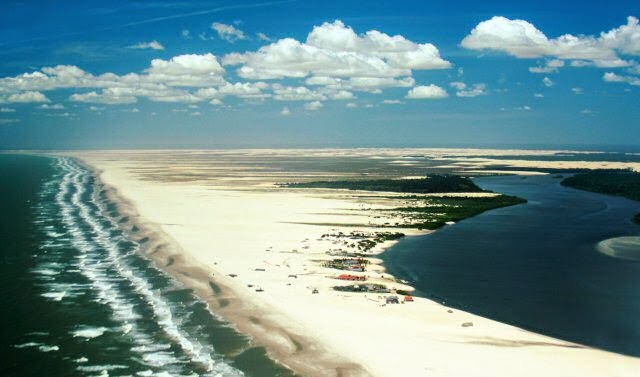


They found they were half a mile of Ponte dus Mongues and four and a half miles west of the Rio Perguicas. They found some fishermen who took them five miles up the river to Pharo. In the afternoon Willem Broekhof left on horseback for Barreirinhas, where he arrived at night and reported to the chief of police there. The British consul then took charge and the men were well cared for until they were well enough to travel back to the United States. Two men died during there stay in Brazil. One of them was my great- uncle Sietze Stenekes, who was badly wounded.
Sietze was buried in Barreirinhas. Later his remains were transferred to Puerto Rico National Cemetery where he is buried as an American soldier.Sietze was 56 years old.
Now we finally know, after 70 years. Your father and mother, your sister, your cousins, nephews and nieces always wondered what happened to you. So sad for your sister my Oma (grandmother) she has had her share. Two son in laws killed by the Japanese, one of them found a grave on the bottom of the sea and one of them (my father) worked to death on the Burma railroad as a slave laborer. May you all rest in peace.
Sietze, brother of my Grandmother.
Kanchanaburi , Thailand.
My grandmothers son in law Klaas van der Wal.My father.
 The  0-16 went down and found her last resting place
My grandmother's son in law Tobias van Driel.
Tobias was married to one of my grand mother's daughters, the wreck of the 0-16 was not found until 2005. The two daughters who made it safely home, after being captured by the Japanese and spend three and a half years in concentration camps on the island of Java.It has not been easy for my Oma (grandmother) Two of her girls so far away, both losing their husbands and to have never known what had happened to her brother.A war brings so many tears and pain. A war will end, the living will mourn, and can do nothing to cope...but cry....

83 days on a life raft

As harrowing as the eight days was on the life boat, it could not match that of a trio of other Zaandam survivors. Three months after the Zaandam went down, the total missing persons had been reduced by three, when a raft was picked up by a U.S. Navy patrol craft, PC 576. On the raft were Kees van der Slot, 37, of Rotterdam, an oiler, Nicko Hoogendam, a 17 year old Dutchman from Vlaardingen, and Basil Izzi, 20, from South Barre, Massachusetts, of the American gun crew on the Zaandam. The men had drifted for eighty-three days, from November 2, 1942, to January 24,1943. Originally there had been five men on the raft, which measured only eight by nine feet.George Beezley, an American sailor who had been a passenger on the Zaandam died after sixty-six days, Ensign James Maddox of the U.S. Navy, who had been in command of the gun crew on board of the Zaandam, passed away on the seventy-seventh day.They kept themselves alive with plenty rain water, food was the major problem. They finally managed to catch a bird on Thanksgivings Day, just after they had been passed by the first of three ships that didn't see them. After that they caught a shark, using their toes through a noose as a lure, but the meat would spoil in a few hours.
Finally they were rescued by the US Navy patrol boat, PC 576, which detached itself from convoy whose planes had spotted them, the men were living skeletons and had lost about eighty pounds each in the more than two thousand miles they had drifted.

                                                              WAR ( a poem by Win Rainer)

Can anyone forget the war
The principles worth fighting for,
Can we ever accept loss of life
The sadness and emptiness of a wife,
Times are changing that we know
Leave our young in peace to grow
How can they achieve and understand
Any nation over land,
Power is a mighty blade
That never achieved any grade
Young people have the right
To their life without a fight 
To make their way in peace
War is nobodies release.

Saturday, February 21, 2015

Beheading of Japanese hostages Petition;243


                                    FOUNDATION OF JAPANESE HONORARY DEBTS
                                                                                   NGO. STATUS Roster


His Excellency Shinzo Abe
Prime Minister of Japan

The Hague, 10 February 2015
Petition: 243
Subject: Beheading of Japanese hostages by ISIS


Excellency,


We are horrified by the beheading of the Japanese hostages by the Islamic State tyrants. We offer our condolences to the Japanese families and friends of the murdered hostages. They must be in a terrible state of fear, pain and anger. The video pictures showing the barbaric executions must hurt them deeply. The pictures prove ISIS merciless killing, underscoring their demands and use of terror. Families and friends of the victims will be traumatized by it forever. They will need support now and in the future in coping with the traumas. Their lives will never be the same again. The gruesome pictures of the beheading will never go away.


WE KNOW IT ALL TOO WELL, WE HAVE SEEN AND EXPERIENCED IT OURSELVES.

Prime Minister,

In our sympathy with the Japanese families we feel the pain and sorrow. Many of the surviving Dutch from the Dutch East Indies had comparable experiences. Japan has a history of similar terror whilst occupying and colonizing South East Asia. During that period public beheading was part of their barbaric rule. The Japanese military had no mercy during their regime of terror and abuse. Only after Japan's capitulation in 1945 did the survivors learn about the fate of their loved ones. They cannot forget the shock that their father, grandfather or son was beheaded by the Japanese military. Today's pictures remind them of that cruelty. I know from personal experience how it feels. After 70 years I still feel the pain and sorrow.

I hope that my father and grandfather will rest in peace, which was taken away so cruelly.

Prime Minister,

According to CNN and NHK you said: " We are deeply saddened by this despicable and horrendous act of terrorism and we denounce it in the strongest terms. To the terrorist, we will never, never forgive them for this act.''
For the Dutch whose relatives were killed in the same barbaric way it is still very hard to forgive the Japanese. So you see your recently expressed sentiments match ours. The fact that the Japanese government still denies any responsibility for these criminal acts during World War Two, leaving the victims families behind without condolences and sympathy, makes it even harder to forgive, let alone to forget.

More than ever the future of Japan lies in acknowledging its past and accepting full responsibility for that past.

Prime Minister,


In any event we hope that you will take responsibility in taking care of the families of the beheaded hostages. You cannot claim that the victims had no business to be there nor can you ignore Japan's responsibility to take care of the families of the beheaded . Demonstrate for once, in securing Japan's future, that you care and take responsibility now and for the past.


On behalf of the Foundation of Japanese Honorary Debts.


J.F. van Wagtendonk

President


================================================================

This petition was handed over on February 10, 2015, to the Japanese Embassy in The Hague at our monthly demonstration, which takes place every second Tuesday of the month.

When I was typing this petition 243 on my blog, tears were streaming down my face.Back were the days when I heard my mother's screams in the night, being raped over and over again by these monsters, during our captivity in Moentilan on the island of Java. Her dreadful nightmares, returning night after night, being beaten and beaten again, being so afraid that the children would starve, wondering again and again if they ever would make it out alive. Seeing her friends one by one die, seeing them being tortured in front of their eyes. Yes Prime Minister Abe your fathers and forefathers, were like ISIS. How can one be so two faced as this Prime Minister of Japan, who keeps denying all the atrocities inflicted by Japan's former military.How can this Prime Minister worship those war criminals laying in the Shrine who did exactly what ISIS is doing now. BEHEADING, RAPING, BURNING AND BURYING PEOPLE ALIVE.Playing soccer with the heads of the beheaded, Spearing the heads on bamboo sticks and than displaying them for all to see. Yes Shinzo Abe, your former military played games, who could behead the most men in 20 minutes with their swords.The swords your former military liked to use on every occasion.Your former military even beheaded women for trying to steal some veggies from your former military vegetables patch.The vegetable patches which the women had to take care off, day in and day out, in the burning tropical sun, until they passed out.My mother and her sister would never forget how hot the sun was beating on their heads and how these  monsters used the backs of their swords on them if they stopped for a minute to catch their breaths,.Vegetables, which looked so delicious and which they would have liked to feed to their children, who were starving to death.Yes Prime minister Shinzo Abe, it now hits close to home, and it hurts, it hurts unbelievable. I hope you can feel the anger and feel the pain, like our mothers, fathers,children, and grandfathers were feeling. The pain and the anger still felt by the victims who are still alive today.

How can this Prime Minister say what he said on CNN and NHK, when this Japan has not cleaned their own barbaric past.Indeed Sinzo Abe, we can never forgive and never forget what those Japanese monsters did during WW2. How sorry and saddened I feel for the families of these Japanese hostages and how I feel the anger towards ISIS. this is exactly how I feel towards you Prime minister Shinzo Abe,How can one forgive a nation like Japan that cannot come to terms with their past, and how can one forgive and forget a nation like Japan that changes their history books, which is full of lies anyway.


Tuesday, February 3, 2015

Our monthly demonstration., 2015


Den Haag, January 13,2015

PETITION #242; A NEW YEAR TO RECONCILE AND REDRESS.

His Excellency Shinzo ABE

Prime Minister of Japan


The Hague, 13 January 2015.

Petition: 242

Subject: A new year to reconcile and redress.

Excellency,

The Foundation of Japanese Honorary Debts and the supporters, wish you and the people of Japan a happy and prosperous New Year. A year in which your promised change towards a lasting peace based on Japan's economic revival may come through.With your renewed mandate you and your cabinet obtained the time and the support in shaping up a "new Japan"ready for its peaceful and democratic future. It also gives you the opportunity to make good the past in view of that future.

Prime Minister,

In the past year you invested heavily in international relationships with your neighbors and with The Netherlands during the Royal Dutch visit to Japan. During the many international visits you were reminded that Japan's military past is not forgotten. Regardless of your efforts and demonstrations of goodwill it became clear: a positive resolution of Japan's war history is essential in developing future relations.

Japan cannot but accept the facts and come forward with sustainable proposals acknowledging these facts. Japan must offer the surviving victims and their next of kin reconciliation and redress. The 15th Augustus 2015 commemorates the end of World War Two. After the war Japan was given the opportunity to resurrect and to reconcile, but failed to redress its wrongdoings during that war.

Prime Minister,

It is only eight months to the 70th Anniversary, a limited time in which to come to terms for a sustainable solution. You are now in a position to demonstrate that Japan wants to reconcile its past and invest in a peaceful future. Japan cannot continue to live with its unresolved past of coercing Comfort Women into military sexual slavery. Kempetai terrorism, unit 731 medical experiments, racial discrimination and large scale concentration camps with the purpose to annihilate its inmates. The victim countries and their NGO's will continue to remind Japan and the international community that reconciliation is long overdue and cannot wait any longer. On the 15th of August 2015 you can give Japan back its respect and establish a sustainable future.

Prime Minister,

The Foundation of Japanese Honorary Debts has written 241 petitions to the Prime Minister of Japan, which were handed over to the Japanese Ambassador in The Hague personally. We never received from the Prime Minister of Japan an acknowledgement of receipt of any of the petitions, nor an encouragement to resolve in a dialogue a meaningful solution.As a Non-Governmental Organization we are respected and accepted by the United Nations and the Dutch Government. It would be a matter of politeness and respect if we receive from you an acknowledgement of receipt of our petitions and an encouragement to future dialogue.

On behalf of the Foundation of Japanese Honorary Debts.

J.F.Wagtendonk

President.

==========================================================
This year marks the 70th anniversary of the end of World War Two, which cost many people their lives.
The current Japanese government still refuses to own up to their mistakes and continue worship their World War Two officers as heroes.

It will be 70 years ago this year in August that the terrible A-bombs were dropped on Hiroshima and Nagasaki.

The victims of the Japanese horror concentration camps are finally able to say how grateful they are that the A-bombs saved them from mass destruction. And not only the quarter million or so allied prisoners, but also the millions of Asian people in the various occupied regions who would have fallen victim to Japan's war atrocities if the USA had not been able to force Japan to capitulate. Total surrender was so offensive to the Japanese military tradition that they would rather die and let millions of others die with them. Gradually more and more secret documents, that were intercepted by the US Army Secret Service, are being declassified and their content opened to the public. Such as the emperor Hirohito's secret order ( August 1944 ) to eliminate all imprisoned enemy-persons, both Western and Asians as soon as the Allies invaded Japan or made warfare for Japan difficult. The Camp commanders were free to choose the liquidation method most appropriate for the situation. The original document offers a choice of poisons, poisonous, gasses, drowning, decapitate and mass bombardment. There was one condition "LET NO PRISONER ESCAPE AND DO NOT LEAVE ANY TRACES".


We were finally free, although it came at a terrible price. Japan's emperor Hirohito is to blame for the bombs . He was warned and offered his own people. Sadly a second bomb was necessary to be dropped to convince Japan to capitulate.

The war with Japan was finally over. We the women and children had no idea that we were freed from our tyrants. They the Japanese kept it from us, for another week. When the prison doors finally opened we were like zombies, not believing that we were free. It took another three and half month's to reach us and take us to a safe place.

Photographs were taken from the concentration camps in Europe. The holocaust of the Jews and the terrible mass murders, None were taken from the concentration on the other side of the globe. We were the forgotten ones. Our voices were silenced. It was said over and over:"It could not have been as bad as how we suffered in Europe".You people were in paradise compared to us. Our mothers and fathers kept silent, it was no use to talk about  the mass murders the rapes and how they were tortured. Get on with life and try to forget for the sake of our children. That was important to my mother and her sister.Lets try to erase what is in our children's mind.How important it was to them that we would not have trauma's about what we children had seen. Trauma's our mothers and fathers suffered the rest of their lives.So terrible sad, ones a war victim always a war victim. How can one forget the atrocities the Japanese military inflicted on them. The rest of their lives they were visited by these monsters in the night, and were over and over raped by these beasts, who called themselves soldiers.Soldiers who are suppose to protect us from evil and defend their country.Soldiers who are not been rewarded with innocent girls for pleasure., like Japan did rewarded their soldiers with young girls taken from our camps and forced into serving these monsters. Young girls taken from the concentration camps in front of their mothers eyes, girls who did not even know what sex was all about. Raped as ragged dolls by as many as 15 men, no monsters, a day How can one forgive these Japanese military monsters from the past??
Our mothers and fathers, our sisters and brothers were too traumatized to talk about what these monsters had done to them.

But we the children will not be silenced!!!
Mommy did I bow the right way?
We children were scared to death that we did not bow the right way. Our mothers would get a severe beating if we did not do it right. Bowing had to be done precisely. The Jap would beat my mother right in front of my eyes.

We will keep remind Japan about their past!!!


I will never forgive what the Japanese military has done to innocent women and children. I will never forgive that they raped my mother and her sister over and over again in that horrible filthy camp in Moentilan. And of all places in the church on the property of the camp, where they held us as prisoners, used us for slave labor, worked the poor women to death, starved them and tortured them for three and a half long years. I will never forgive the Japanese military for their past, beating my mother and my aunt in front of us children, because we children had not bowed properly.I will never forgive Japan for killing my father and millions of others, building that infamous railroad line through the jungle.I will never forgive Japan's former military for beheading so many innocent boys and men. How can one forgive Japan for the horrible atrocities their former Japanese military inflicted on innocent women,men and children. How can one forgive these horrible men who raped little boys no older then 10 years old.How can one forgive Japan, a Japan which to this day don't even admit their forefathers sins. Shinzo ABE you and your cabinet makes my blood boil. Why is it that your government cannot admit their wrongdoings, committed during World War Two. How can one forgive some one who lies about their past???
Here I am with the boys from the neighborhood.


What happened to these boys. My mother never found out. So sad to think about these young lives.It was always on my mother's mind. Where are they, did they survive the camps? What happened to their mothers, their father's.????
Those who forget their past, are condemned to repeat it. George Santayana is right. It really shows, history is repeating itself over and over again. 

Tuesday, December 9, 2014

Our monthly demonstration: petition:241

                               FOUNDATION OF JAPANESE HONORARY DEBTS
                                                                              NGO, Status Roster


His Excellency Shinzo Abe
Prime Minister of Japan


The Hague, 9 December 2014
Petition: 241
Subject: Coercion by Japanese military of women and girls into sexual slavery is an undeniable fact and a war crime of the worst kind.

Excellency,

It is unbelievable that the Yomiuri Shimbun deemed it necessary to apologize in reporting the truth about the coercion into sexual slavery of women and girls by the Japanese military. The Military Court Martial of Batavia, Dutch East Indies, concluded in 1947 without any doubt that officers of the Japanese Imperial Army were guilty of coercing into prostitution Dutch women and girls from concentration camps under management by the Japanese army. The women and girls were kept and treated as slaves for the pleasures of Japanese officers. It is an undeniable fact and resulted in severe punishments including the death penalty of the main culprit. Documents available to the Court, which are kept in Dutch archives, established without doubt the coercion of the women and girls kept as sex slaves for the Japanese military.

Prime Minister,

Denying the coercion because of lack of proof in existing official Japanese documents begs the question whether these documents were not destroyed along with many other documents hiding the Japanese war crimes. You cannot change history by pretending that it did not exist. The denial of Japan's war past is equivalent to the denial of the Holocaust. On behalf of Japan you must acknowledge the past and take responsibility for it.
Yomiuri Shimbun printed the truth and had no need to apologize for it.
The world media know this and assume the reasons. Only you can rectify this by a genuine personal acknowledgement.
Repeat and take responsibility for it in accepting the consequences of these and other horrendous Japanese war crimes.

On behalf of the Foundation of Japanese Honorary Debts,

J.F. van Wagtendonk
President.

=========================================================

How dare Japan's nationalists attack Angelina Jolie war film. The film "Unbroken" based on the memoirs of US POW Louis Zamperini.
Louis Zamperini an Olympian runner.

Japanese nationalists have labelled Angelina Jolie a racist and there have been calls for her to be banned from the country for directing the movie "Unbroken".

How dare they make us out as liars. The soon to be released film  "Unbroken" is about the Olympic runner Louis Zamperini. It's a film which focus on the suffering of Allied soldiers in the Far East.

Louis Zamperini just passed away, and I am so glad he has not read that these Japanese nationalists are saying that this film is pure fabrication.Louis Zamperini passed away on July 2, 2014. He was 97 years old.

One wish I have, that  there soon will be a film about the 130.000.00 Allied civilians- predominantly women and children- who also endured appalling privation and cruelty, but whose story is barely unknown.

These women and children were trucked away to concentration camps.  The largest group were the Dutch civilians.62.000 of them were women and children. For three and a half years they were terrorized, starved, raped and tortured. 13,000 died in these camps, which the Japanese had named "Protection Camps". Protected from whom?  The women and children were crammed together in these filthy camps, where poor sanitation was the norm, and dysentery and typhus flourished, along scabies, bedbugs and lice.  We were in camp Moentilan, a former  Xavier catholic college, which housed 4200 women and children.The Japanese military were brutal, we Westerners were in their eyes no human beings.

I sincerely hope that a film will be made about this part of the war, where the women and children seem to be forgotten.Women who were traumatized for the rest of their lives, children who could never forget the savage beatings their mothers received when we children did not bow correctly.
By the time the war was finally over, we were skeletons, who walked like zombies through the camp in disbelieve that we were free from our tyrants the Japanese military.

It's time the truth will be heard and Japan takes responsibility. Shame on their flag the Rising Sun, which my mother predicted would sink on the horizon.


Wednesday, November 12, 2014

Our Monthly Demonstration.Petition:240


                          FOUNDATION OF JAPANESE HONORARY DEBTS
                                                                           NGO, Status Roster

His Excellency Shinzo Abe
Prime Minister of Japan


The Hague, 11 November 2014
Petition:240
Subject: By Imperial/Royal command


Excellency,

It is with great respect and admiration that we heard the wise words spoken by both His Majesty the King of the Netherlands and His Majesty the Emperor of Japan at the state banquet during the recent State visit in Japan.

His Majesty the Emperor of Japan raised an important point:

"There had been several earlier plans for Queen Beatrix to visit Japan, but they were cancelled each time due to opposition in the Netherlands.
It was most unfortunate that these long friendly relations between Japan and the Netherlands should have been marred because of World War Two. While never forgetting this past, we hope to give more attention than ever to the promotion of good will between two countries."

In his reply His Majesty the King of the Netherlands made his position very clear:

"We will not forget-cannot forget-the experiences of the Dutch civilians and soldiers in the Second World War. The wounds inflicted in those years continue to overshadow many people's lives. Grief for victims endures to this day. Memories of imprisonment, forced labor and humiliation have left scars on the lives of many. The Japanese people , too, suffered terrible during the war, especially in the final phase, marked by such destruction and violence. Acknowledging the sufferings of others provides a foundation for reconciliation. Many in Japan and the Netherlands have actively worked to foster such a reconciliation, enabling new trust to grow."

Prime Minister,

The Foundation of Japanese Honorary Debts did not object to this State visit by their Majesties the King and Queen, because of the hope and belief in their goodwill and genuine interest in the well-being of the Dutch Nationals, who suffered both inside and outside the Japanese concentration camps at the hands of the Japanese military during the occupation of Dutch East Indies. 

Prime Minister,

The monarchs of our countries have spoken and instructed you and me to come to terms "enabling new trust to grow." The people of Japan and the people of the Netherlands expect, and deserve, this from us too. It is not a political issue, but a moral issue that needs to be resolved. The Foundation of Japanese Honorary Debts has painstakingly tried to maintain a genuine dialogue with various Ambassadors representing Japan in The Hague, the Netherlands. We suggested various possibilities to bridge the gap but met a stalemate of legal arguments, whilst we must find the moral solution acceptable both for the people of Japan and of the Netherlands.

Prime Minister,

Morality is strongest when it is transferred into tangible and real actions and results.
You and I now have a honorable challenge to meet, set by my King and your Emperor. In my capacity as the trusted representative of the war victims and in your capacity as well-respected statesman we have the chance to recreate shared morality between our two peoples.
We cannot fail our Royals, as they are the ultimate moral embodiment of our two peoples. You and I now hold the key to reconcile that period in history that is so hard to forget. It would be a personal shame for both of us to not succeed in this challenge.

His Majesty the Emperor of Japan and His Majesty the King of the Netherlands expect that we move forward. I am prepared to do so and expect you will do so also.
Amendments to the 1956 Yoshida-Stikker protocol may be the base for arriving at an understanding. It is never too late to do the right thing.

On behalf of the Foundation of Japanese Honorary Debts,

J.F. van Wagtendonk
President
      
_______________________________________________________________
                                   Established 4 April 1990
Zoutmanstraat 23X, 2518 GL. Den Haag Tel: 0703063742 Fax:0703062388
Website:www.japanse-ereschulden.nl Mail:info@japanse-ereschulden.nl

++++++++++++++++++++++++++++++++++++++++++++++++++++++++


Today  is Remembrance Day, and I will remember them, who gave their life so we could live in peace.I wear my poppy with pride.Today the 11th day of 11th month at 11 o'clock we remembered...............
Poppies are worn to commemorate servicemen and women who have been killed in all conflicts since 1914. The poppies are worn from the 2nd until Remembrance Sunday. This year the 11th. 

In Flanders field the poppies blow'
Between the crosses, row on row,
That mark our place; and in the sky,
The larks, still bravely singing, fly
Scarce heard amid the guns below.

Flanders is a region around the border between Belgium and France, where several major battles took place. After the war the fields bloomed with bright red poppies, which is apropos considering the amount of blood spilled there. The tradition of wearing the poppies was started by an American humanitarian named Moina Michael.
When you Forgive,
You don't change the past,
You change the future. 

Sounds good, doesn't it? Forgive, which was a word that made no sense to me This made me start to think about the word forgive.So many times I  heard somebody say; I forgive the person or persons who tortured, starved,and killed dozens of people, women, children and men. I always wonder what made them say this. How can one forgive another human being for such horrible crimes.  I will never be able to forgive what the Japanese military had done to my mother and her sister while in these horrible concentration camps for three and a half years during World War Two. But after I read the following I started to think about the word forgive.Would I be able to say:" I forgive the Japanese military for what they have done to my mother, her sister and their husbands, our fathers.and thousands of innocent women and children.These monsters systematical starved, tortured and worked us to death. How can a human being turn it's back on a child who is hungry and torture this child eating delicious food in front of this child's eyes.Children who died daily in the camp because the mothers had no food to give them,and no medicines to give them. While the Red Cross had send food packages and medicines for us. The Japanese kept it for themselves and tortured the children, with promises and than turning their backs.While I am writing this, it  still makes no sense to me to say the word forgive(."I forgive.") am I able to say it??? I still struggle to actually say it and mean it.Deep in my heart I will never and can never forgive those monsters. The Japanese military had ruined my mothers and her sisters life.I saw the daily struggle of my mother after the war. I knew she had these terrible nightmares.A war never ends for a war victim. Once a war victim always a war victim.If I came face to face with these monsters who call themselves soldiers, I would never be able to tell them;" I forgive you for beating and raping and starving and working our mothers and fathers to death. I forgive you for killing my father, for pushing men off the cliffs when they were no use to you anymore, killing other human beings as if they were puppets, who run out of fuel.I can never say ;"I forgive the former Japanese military for all they have done to other human beings, during World War Two. These people were not human. How can one forgive these evil people?Look what is happening now with these evil people ISIS. They are doing the same as what the former Japanese military did to innocent women and children. Ask yourself ; Can you forgive these evil people who are murdering and raping innocent women and children, because they have a different religion? It's sad, but as the above says;You change the future!??? Nothing has changed, people are still killing each other because of religion and politics..

Banjoebiroe 10 concentration camp.
Women and children behind barbwire and high walls for three and half years. Treated like they were not human.

The following is a poem from a Dutch boy, his name is Peter and that's all it says.I will translate as best as I can.

Mother,

Did I bow deep enough Mommy, so you didn't get beaten?
Is it because of that, dear Mommy that you were silent all those years?
Did you look during that time through the eyes of your child
and heard through the ears of children the stress before the Roll Call started?
Mommy do you have any idea what they did to my soul ?
because of those screaming Jap's in that camp so far away!

Peter ,

Many children who grew up in these camps can relate to this. The scary moments standing there all lined up before those scary men with these big swords and boots, in the hot sun or in the Monsoon tropical rains.The monsoon started in June and it could be very cold.It would rain for days which made the Roll Calls even harder. You had to bow precise,women and children would stand there for hours on end. It was like these Japanese men had nothing else to do, and enjoyed themselves tremendously seeing us getting soaking wet from the rain or getting soaking wet from the hot sun beating down on our heads.Sometimes we had to stand there for hours as punishment, because somebody had done something wrong. That was the worst, everybody had to be present at roll-call (Tenko) and it meant for everybody to stand there for hours  in the burning sun, even the children and the sick had to be present.Many women or children collapsed. When you tried to help this person, you were punished by the guard. You received a severe beating with a cane and had to stand for hours in the sun without food or even a drink. Some women succumbed. The Japanese guards were brutal. Once my cousin and I were playing outside in the dirt, our mothers were nearby, and a Japanese Officer passed by, our mother's bowed and my cousin and I smiled and waved at him. Oh dear, we forgot to bow. He stopped and asked our mother's if these child's were theirs. Then he started to scream in Japanese to our mother's and he started to hit them. They had to come with him, and he pushed and shoved, and pulled on their hair, and in front of the church for everybody to see, they had to stand straight up with their faces towards the direction of Japan and at his command they had to bow for him. My mother looked at him and spit him in the face. She should never have done that, because this triggered an explosion of madness from this Japanese Officer. He beat them with his sword and ripped their clothes.This man lost control and nearly killed my mother and her sister, because their three year and four year old children had not bowed for him.My cousin and I screamed and cried, because we had no idea why our mother's got spanked. Had they been a bad girl, because only bad girls got slapped.
My Mom, October 1941
My Mom a very special woman. A mother with a beautiful smile.Happily married and a mother with a five month's old baby, which is me..A mother who had her whole life in front of her. And than, suddenly the Japanese invade the former Dutch East Indies and her happy life is snatched away.

My Mom, March 1946.
This picture was taken in March 1946. She had just recovered from near death. Three and a half years in concentrations camps and the beatings, and starvation and being raped had nearly cost her, her life. When the picture was taken she had just heard that her husband would never come back. Her smile gone...Her house gone, her bank account gone. The Japanese military had taken it all.Another conflict broken out, and again innocent people were in the middle of it. Bombs and shootings every where. Killings all around them, nowhere to be safe anymore. She felt totally lost.But being my Mom she was able to get us on a ship, which took her to the Netherlands to her Mom and Dad. My Oma(grandmother)and Opa (grandfather). How I loved my Oma and Opa and my Mom told me later in life that I said many times:" Mommy can we please stay forever in this camp?". Very slowly her smile came back. I always will remember the sight of my mother crying, that's the worst sight a child can see.Something you can never forget, and can never forgive those who did this to our  helpless mothers.My Mom past away in 2003, never be forgotten. We miss you. Remembering you always.Your name many times is spoken when we sit at the dinner table and one of us is not able to finish his or her plate. We would say; Remember Mom, Oma she made us finish our plate, because food cannot be thrown out, many people in this world are starving and I know all about it.
Yes today is Remembrance day. I wear my Poppy, are you?


Friday, October 17, 2014

Our Twenty Years in Jamaica.

It was 1990, August 1st, when we moved in our house in Jamaica in the town of Runaway Bay.We spend many happy years in this house. We and the house went through four Hurricanes while we were living there.I just like to put some pictures in this book for keepsake for spending twenty years in this house. Thank you for giving us so much pleasure and thank you for keeping us safe.You are still standing and we hope the people who are living in the house now, will enjoy you just as much as we did.
The name of our house. Windblown
First I like to write about our move to Jamaica and why it was we ended up in Runaway Bay. In January 1989 we went on a cruise with friends. Our friend Bruce Hood, who used to be a well known ice hockey referee, had just retired and had opened a travel business.We played tennis a lot with his wife Joanne and that's how we got to know them. We have so many good memories, they lived in Milton.Our kids were very young, so we visited each others home often. We had lunches after tennis and at Joanne's house we enjoyed an indoor pool and jacuzzi. We had a wonderful time, playing tennis being together with this group of women. I will always have fond memories how happy we were.Some of us are not with us anymore. One of our dear tennis friends passed away last year. Now we are getting older we realize how fortunately we were to be able to have those years.. Life was good to us.Bruce had organized that our whole group would go on this cruise.It was January 1989 and we had to travel to Jamaica, to the harbor of Montego Bay, where we boarded the Britanis, one of the cruise liners of the Greek Chandris group. My husband Ruud and I and twelve of our friends including Bruce and his wife Joanne had a wonder full time.This cruise is a story on it self, which I will write about too. I have so many things I still like to do and I hope I find the time to do all the things which I still like to write down.
Lets get back to our story about the cruise;
On the way back we decided to top our cruise off with a stay at Club Caribbean where we owned one of the cottages at the Hotel Club Caribbean in Runaway Bay.


We were told by the owner of Club Caribbean, Richard Salms, that we were welcome to stay, but that the Hotel was damaged by Hurricane Gilbert and all cottages were under construction.Hurricane Gilbert had struck the island on September 12, 1988 and had caused a lot of damage. We had no idea how much damage this storm had caused. But he told us that he was able to provide us with a couple of cottages and that we had to take care of our own food. He supplied us with a large barbecue, and what fun we had, between all the rubble which Hurricane Gilbert had left behind when it had hit Club Caribbean on September 12, 1988 full force.

Jack McKay and John looking after the barbecue.


Friends from England, Sheena Hartley and her husband Joe, who we would meet every year at Club Caribbean decided to come over and spend the week with us.They owned one of the cottages as well.We both were share holders.

Picking-up Joe and Sheena up from Mo-Bay airport. 
 Sheena had gone back into the airport, cause Joe had lost a shoe. Never found it.

We see Sheena still every year and we became friends on one of their holiday stays at Club Caribbean some time in 1980. When we arrived at he Hotel from our ten days cruise we were shocked to see the Hotel.

Camping at hotel Club Caribbean Feb.1989


Dinner is ready!
 Sheena on the left, Thea in the middle and Joyce on the right. Don't we look like we have done this before?
We were playing horse shoe.Sheena was the best.


We had no idea that Hurricane Gilbert had caused so much destruction.  I cried my eyes out when I saw it, we had no idea.This was our second home,here we spend our vacation every year with our children. We had come to Club Caribbean since late 1976, and would spend some wonder full times with our children Monique and Dan for many weeks every year.. They almost grew up here, both speaking the language patois. Specially Dan our son is very good at it.Oh how sad it was to see the cottages like this...

Here some photographs of the destruction of the cottages at Club Caribbean.


With our friends, camping at Club Caribbean 1989.
Ruud in the middle, left: Thea, Moira Graham, Sheena Hartley. Right: Stewart, Carl Hageman, John Clifton.

Hurricane Gilbert was an extremely powerful tropical cyclone. It was the most destructive in history. This hurricane was the first in 37 years that hit Jamaica directly. It was the most severe storm since Hurricane Charley in 1951.
Because of its devastating impact, the name Gilbert was retired from the list of hurricanes names. We had seen destruction from hurricane Allen in 1980 when we were vacationing in Jamaica but the damage from Gilbert was not to describe. The entire island was ravaged and Club Caribbean had received a lot of damage. It was closed for more than a year, but it was rebuild and we spend many happy years at this beautiful property in Jamaica on the North coast of Jamaica.
When we were invited to stay at the Club in 1989 during the reconstruction of Club Caribbean, we were approached by the owner Richard Salms and were offered to open a dive shop on the property. We were ready to take on this challenge. Building it from the ground up. In May four months after we had spend a week at the club between all the rubble Ruud stepped on the plane and started our new adventure in life. Opening our first dive shop in the Caribbean on the island of Jamaica. Not knowing that we soon would owe four dive operations all over the island and a sand pumping business, building beaches for hotels. Hotels who had lost their beaches in this horrible hurricane.What a life experience. Not many people in their life time would have the chance to do what we did. Of course it took some guts, but we did it, and no regrets. Twenty years we spend in Jamaica and our kids Monique and Dan worked along side with us. What more is there to wish in life, having your children helping you to set up a business in Jamaica.Both Dan and Monique are divers. Monique became a dive instructor in 1990.Dan became a dive master and we had numerous dives together.

So much destruction.
This is how we found the dive shop after we took over.

In just five months of hard work the dive shop was in operation.


Our fleet ready to take guests out  to make their vacation a memorable one.
Our crew, second from the left our son Dan.

More crew members. 
On the left is me Thea, third from the left is Wayne our son in law, Monique our daughter first on the right and Ruud second from the right.Our dog scuba, which Monique found.When she brought it home it looked like a rat, so terrible scruffy. We did not think it would live.But she nourished it and this dog was such a nice dog.She..this dog... would swim every morning with Ruud out to the boats and would sit on the bow pretending she was the captain when Ruud would pull the boats to shore. It was hilarious. This was every morning Ruud's exercise, swimming the boats in. Scuba that's how we named this dog would already wait for him on the beach, ready to swim out.

Our crew at work at the rinsing basins.
 Wayne painted the wall mural, and wrote it in Patois, the language the Jamaicans use.
Patois is a dialect of the common people of a region, differing in various respects from the standard language of the rest of the country. Like we have in the North of The Netherlands, like Friesland, where the people speak Friesian, which people from the other states can't understand a word of what their own countrymen are saying.
Our youngest crew member.
Our grand son Sam and our grand-daughter Saska grew up in Jamaica. They both went to school and it was one of their best time in their lives. What an experience to be able to grow up on an island in the Caribbean.
Saska's first school uniform in Jamaica.
In Runaway Bay at school. Saska middle row third from the right.
Saska, you can't miss her in this picture. At school in Montego Bay.
Sam  with his friends at school in Jamaica, Third from the right.
I love this picture.This picture says it all. We can learn a lot from our children, they do not see color, they only see what is inside. How very fortunate that our grand children grow up in Jamaica, what an experience for their rest of their lives. An experience they will forever cherish and when they become sentimental like Ruud and I are now, they will look back and will say to themselves, "How lucky we were. What good memories we have for the rest of our lives".
We got to know many Jamaicans while we were living there. Jamaicans we still keep in touch with and are on face book. Many of them are living all over the world, England, Germany, Holland, Canada, and America. How nice is that. We share many stories with them. Some of them worked for us and at the time were only twenty years young. They now have their own children and with them we share many, many memories.Children who are growing up in a different country , and hopefully they are able to visit the country where their parents came from. A country called Jamaica, a country which the Jamaicans will tell you, a country out of many, one people.

Coat of Arms of Jamaica.
The coat of arms says it all:: Out of many, one people".

We did not only do the diving but also provided the quests from Club Caribbean with windsurfing, sailing, glass bottom boat rides, snorkel trips and water skiing.To rebuild the club took quite some time but one year
after the monster hurricane Gilbert, the Hotels cottages were ready to be occupied again and the hotel reopened.
See picture below, from the swimming pool.

Slowly the cottages were repaired.

Club Caribbean in full operation again.
It's absolutely amazing how people rebuild their lives after a disaster and start all over again as if no hurricanes exist. We won't be beaten by nature. We will get up and pick up the pieces. Which I had learned from an early age, when we went through World War 2 and lost every thing. The only things we had left, were the clothes on our backs, when the war was finally over and the Japanese surrendered.For three and half years behind barbwire and high fences, almost starved and beaten to death by the Japanese military, her husband (my father) killed , my mother picked up the pieces and started all over.
It's therefor we are thankful that our children are not taking life for granted. While we were living in Jamaica we went through four hurricanes as I wrote in my blog before.We learned many life's lessons. Lessons and memories we should preserve, memories which should be transmitted. If these memories are not shared, they will be forever lost. People often do not understand how breakable ones memory is. It's very important to listen attentively, true tales are meant to be transmitted to keep them to oneself is betray them. Once we reach adulthood, most of us assume we know all there is to know about our parents and other family members. However, if you take the time to ask questions and actually listen to the answers, you may find there is still so much to learn about the people so close to you.
Every person has a story to tell.

We lived on the Runaway Bay golf course.
 At the end of the road lies the Hotel Jewel Runaway Bay which was called before Breezes Hotel. The ocean is across the road, where we had together with the Cardiff Hall association a private beach for the members of this association.  It was nice to there and meet with our neighbors when they were in town. Many of them live in the States and are only in town for three or six months at the time.Some times for me during the summer time it would be a little lonely. I would miss the dinner parties and my friends. The summers would be extra hot.
Our drive way .


Our road in front of the gate.


I loved working in the yard, but sometimes it was too hot.
The front of our house.
A large Almond tree was growing in the middle of our drive way, which was nice because we parked our truck under- neath this tree. It was a perfect shade tree and a perfect place for my many orchids When the orchids were blooming it was so beautiful. Below one of my many Phalaenopsis hybrid orchids.

A Phalaenopsis orchid on my Almond Tree in our drive way.


We loved the design on our gate, which Thea designed.

Our front yard.

Other part of the front yard.
Our living room.


Our kitchen
Our kitchen
Our Den, an extension of the living room.
It was nice to sit here, the breeze blocks would give you some relieve when the evenings were hot.

The master bed room.
We had four bed rooms and each bed room had it's own full bath room. What a luxury was that.

Our house had a wrap around terrace by the pool.


Many nights we would sit on the terrace listening to the sounds of the tropics, with a nice ice cold drink. Our fan would give us some relieve from the sometimes hot evenings in the summer months.


Many, many nice evenings we have spend here serving dinner, with our family and friends. I wonder how it is now. We sold the house in 2011 to two brothers who live in England. They bought the house for their mother. The amazing part is that these brothers are film makers and had just made a documentary of the lives of the mafia in The Netherlands and the mafia in Jamaica.Since we are originally from The Netherlands and were living in Jamaica we found this really amazing and an unbelievable coincident.
Watching the sun sets from the terrace.


Sun is going down. It's around 6 PM


At the end of the pool we had an Orchid house, with many different orchids.

I was a member of the orchid society in Jamaica. We met every month at each others house and talked about new species we had found. Twice a year we showed our orchids at various hotels and many people from all over Jamaica would come to these shows. Compared to some of my friends I was an amateur,  my friends had the most beautiful orchids. Some of the pictures of my orchids I will show here..I have too many to put them all in this album, but here are some of them.


Just clinging to a tree in our front yard.


This white phalaenopsis just grows on the tree by our driveway.
I really can go on and on with my orchid pictures, but these are just a few of them. Have to see if I can find the pictures from inside my orchid house, because I have a beautiful Parrot fountain in my orchid house I like to ad in this album.We also had beautiful hibiscus growing all around the patio by the pool, which I like to show in this album as well. Here are some of them, hope this is not boring.


Parrot fountain in my orchid house.

At the side of the house we had another beautiful fountain.
Everywhere in the garden we had Hibiscus bushes growing. I loved the colors and many of them were double or even triple flowers. My friend Diane Fairchild and I were always looking for other species.She loved flowers as much as I did. Sadly to say she passed away, too young. We have so many memories. Every Wednesday we were doing something else. Many trips to Ocho Rios and many into the mountains.We must have eaten every Jamaican dishes you can think of. The food in Jamaica is to die for. How I often think back on all the trips we made together, either it was Hugh (Teacher) who drove us or Jozef. Later in my story I will go more detailed into it. I have some wonderful pictures from those trips. Often friends who came to visit us would join us on Wednesday.But I save it for later.I am still in my yard now, showing you all the Hibiscus flowers we had.I am showing just the ones which were my favorite.


One of my favorite color.

Okay enough pictures of flowers, but now I am going to the yard, which is very color full as well. We had a gardener and his name was Jack. He took pride in his work and was forever pruning, cutting, and sweeping around the house. Sometimes he got pruning happy and once I came home and noticed some strange things at my orchid house. It was getting dark so I could not have a good look at it, so we turned on the lights. Ruud had made a spot light in the orchid house which was a really nice feature shining on my orchids, so when we came home from work we could enjoy them.
Well, when we turned the spot light on I nearly had a fit!! Most orchids breed from their roots which are hanging down, some roots are one meter long, these roots are their breathing and feeding mechanism.

Roots from my Vanda orchids.


Showing the roots.


I nearly died when I noticed that all the roots from my orchids were missing.
Jack the gardener had been scissor happy, I nearly lost it.Most of my orchids did not make it.  He some times did the weirdest things, and at the end we had to let him go. He was a very simple man with not a bad bone in his body but this was a little too much. We once came home and he had painted the whole front gate black. Now you would say what is wrong with that, but if you look at the picture below..  you can understand why we were mad!


Can you imagine this gate painted all black??
When we asked him why he had done that, he answered, well,,, boss ( he called Ruud )there was only black paint in the shed and I decided that the front gate needed painting.It took Ruud a couple of weeks to get it back to the way it was.We know that many pictures have been taken from our gate..When Breezess Hotel, which was down the road from us, had a wedding the bride and groom drove bye in a horse and buggy, they always stopped in front of our gate and made pictures.


One day we found out that Jack our gardener used the back yard as his toilet under the Poinciana tree. Not only to pee but also to do his big job, as you know what I mean. I noticed one day a funny smell under the poinciana tree and noticed a lot of poop. Now you have to know that we had two dogs, but I wondered why all that poop was laying under the Poinciana tree, and why Jack had not cleaned it up.
The next day when Jack arrived at work I asked him about it. He told me that it was his toilet where he did his doo-doo...he called it.I asked him why he was not using our bathroom, for pete's sake we have four in the house, and one of them was designated for the helper (Annabella was her name) and Jack.He told me that he did not know that he could use the bathroom in the house and I told him in future that's where you go. The next day I get a phone call from Annabella telling me that she and Jack had a fight and if I please could come to the house, because Jack had pulled a moonie at her and she was scared. I jumped in the car and drove home. Jack greeted me at the gate and told me that Annabella had refused to let him use the toilet because he had to do a major doo-doo.She had chased him out the house with an umbrella which she poked at him.So I pulled a moonie at her; he said. I asked Annabella what this was all about and why she did not let Jack use the bathroom. She told me that she used that bathroom and her good clothes were hanging there and that she did not liked Jack to smell up her clothes when he had to do his doo...doo. This is really hilarious, but that's why she did not let him in and told him to go to the Poinciana tree where he always did his job.
We already had a couple of arguments with her, because when she broke something she never told me. Once she broke one of my wine glasses and had put it back together . She had put it back in the cupboard and when I picked it up a big piece of glass fell of and cut my hand. When I asked her the next day why she had put the broken glass back in the cupboard she was showing me how she broke the wine glass and by showing me how she broke a piece off she broke another glass right in front of me.A few days before I had come home and noticed a big piece of glass broken off from one of my cupboards which had a glass top.  When I asked Annabella what happened' she told me that she was dusting and the glass moved and the corner broke off. She then proceeded to show me how it happened.....hmmmm yes.. ....she broke another large piece of the other corner, and told me ...."See missus"....(that's how she called me)..... "that's how it happened".
Needless to say when I found something broken in the house in future,I didn't asked Annabella anymore. She also did not dust under the bed, because she told me "missus I have bad knees so I can't clean under the beds". One morning when I happen to be home I noticed how she dusted. She did not pick up any thing but dusted every where around it.I asked her why she did not move the picture frames and why she dusted all around it. She told me...."missus"....I am afraid to brake these things". I was losing it a bit and told her that she had to be careful and don't be so ruff, pick it up very careful and put it down again very careful.  When we had bought a new electric stove  I had bought dust covers for the burners because our house  has open shutters,this makes the house very dusty. So I had told her that  before you start cooking you have to remove the dust covers.. Annabella decided to cook on top of the dust covers and called me at work that she had trouble with the stove. She said 'Missus' I can't cook today because the stove is setting itself on fire. Well the covers had become so hot that it burned a big hole in my brand new stove. When I asked her why she had not removed the covers, she told me that she thought if she cooked on the covers the burners would not get covered with food, because Annabella had a tendency to let every thing boil over. I had enough of it so I looked for another helper. So after the episode with Jack and the arguing what was going on between Jack and her, I decided to let her go. After Annabella we had Lauraine for 16 years and we believe she is still with the new owners of our house.
Jack our gardener's bathroom under the Poinciana tree.

This is how the tree looks when it is in full bloom.


You never know when the tree will be blooming, it depend strictly on the weather. Some years it was loaded with beautiful blooms and some years we only got lots of leaves.The seed pods on these trees are sometimes 18 to 20 inches long. When they fall from the tree you better do not get them falling on your head.


The flowers are beautiful.
The inside of the seed pods.

Our garden was beautiful, We had banana trees,an orange trees,an avocado trees,a lime trees,a bread fruit tree, a papaya tree and a grape fruit tree and a key lime tree.. We also had a lime tree with enormous large limes, it makes the most delicious lemonade.

Here the banana's are just starting to bloom.
Our breadfruit tree.

When the breadfruit was ripe we roasted them in the oven and cut them in large slices and put them in the freezer. When you fry these slices in the frying pan it's delicious with a little bit of salt and pepper.
Our Papaya tree.
Our papaya tree was growing to close to the house, we had to chop it down, which was a shame.
Our avocado tree.
Our avocado tree was huge, and every year we had lots of avocado's. One year we were gone to The Netherlands on vacation for a month and when we got back all the avocado's had disappeared. We found out that our gardener had taken them all and had sold them to the stores. Oh. boy, were we mad! Same would happen with the banana's.

Our lime-tree.
.
We also had one plant with scotch bonnet peppers...hot..hot..spicy!!

Our delicious sweet juicy oranges, our tree near our pond.
We loved the yard and so did our dog Jessie.
Will continue.....